Heritage Protection
How is Heritage Protected
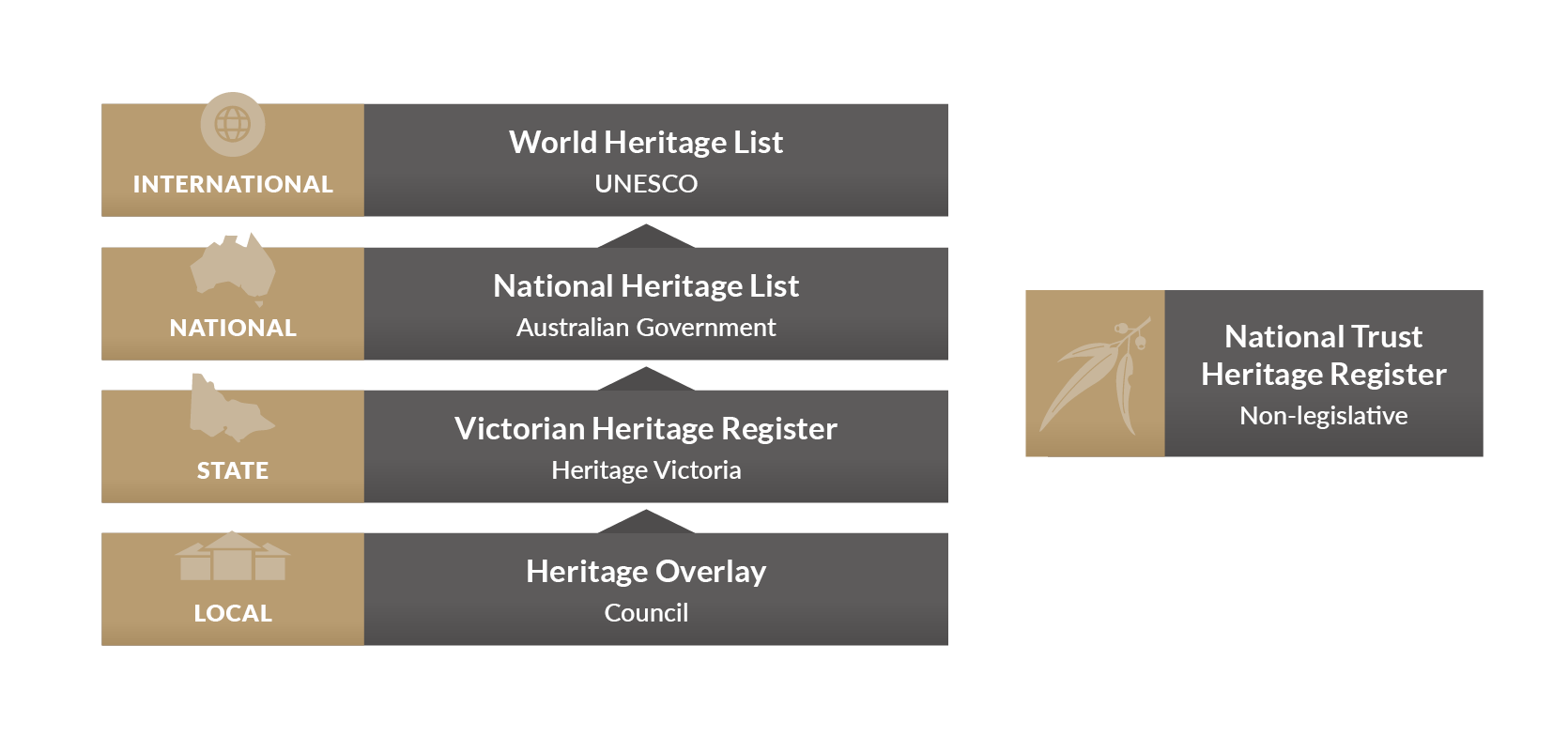
Protecting our shared heritage involves retaining and managing places that have importance to the community. In Victoria, there are a number of ways that places of Indigenous, cultural and natural heritage significance are recorded and protected.
The main categories of heritage listing are outlined below.
How to protect places
The National Trust Advocacy Toolkit is a free online resource to support individuals and communities to advocate for the protection of places of cultural heritage significance. The toolkit includes guides that will answer the following questions:
- What are Heritage Overlays and Planning Scheme Amendments?
- How do I object to an application for a planning permit for a property covered by a heritage overlay?
- How do I appeal a permit decision?
- How do I nominate a place or object to the Victorian Heritage Register?
- How do I object to an application for a permit to change a place or object on the Victorian Heritage Register?
How to check if a place is protected
Local and State
Find out if a place is included in a local Heritage Overlay, the Victorian Heritage Register or Victorian Heritage Inventory.
National and International
Find out if a place is protected on the National, Commonwealth or World Heritage list.
Significant Trees and Landscapes
Find out if a place has environmental landscape or tree protections by searching the address.
National Trust Classification
Search National Trust Heritage Register. Please note that classification of a place by the NTAV does not provide legislative protection.