
Advocacy through the decades
1950s
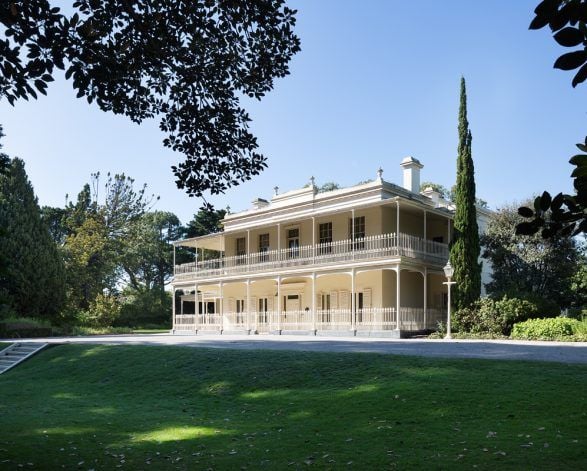
Como House & Garden
The 1950s were a period of increased development in Melbourne, thanks to the post-Second World War migration program and the 1956 Olympic Games. During the post-war boom period, Victoria experienced significant losses of historic places and public open space.
Statutory heritage protections were decades away, and this spurred the creation of the Victorian branch of the National Trust, who were determined to see the preservation of cultural assets that were quickly disappearing without a fight.
The burgeoning organisation wanted to rally around a space of cultural significance, and in 1959 Como House and Garden became the first National Trust property, protecting it from the development threats that led to the loss of many similar places.
Set on a hill along the banks of the Yarra, Como House provided a base for the Trust and a tangible example of heritage preservation and celebration. It was from Como House that the Trust established itself in the eyes of the public and became the voice for cultural conservation in Victoria.
Without the foresight of the founding members of the National Trust, there is no telling how much of Victoria’s cultural heritage would have been lost forever. Thanks to decades of careful custodianship, Como House and Gardens remains open to the public and continues to thrive as a public space.
If these two issues are not addressed there will not be the conservation skills required to sustain cultural heritage values in Australia into the future.
1960s
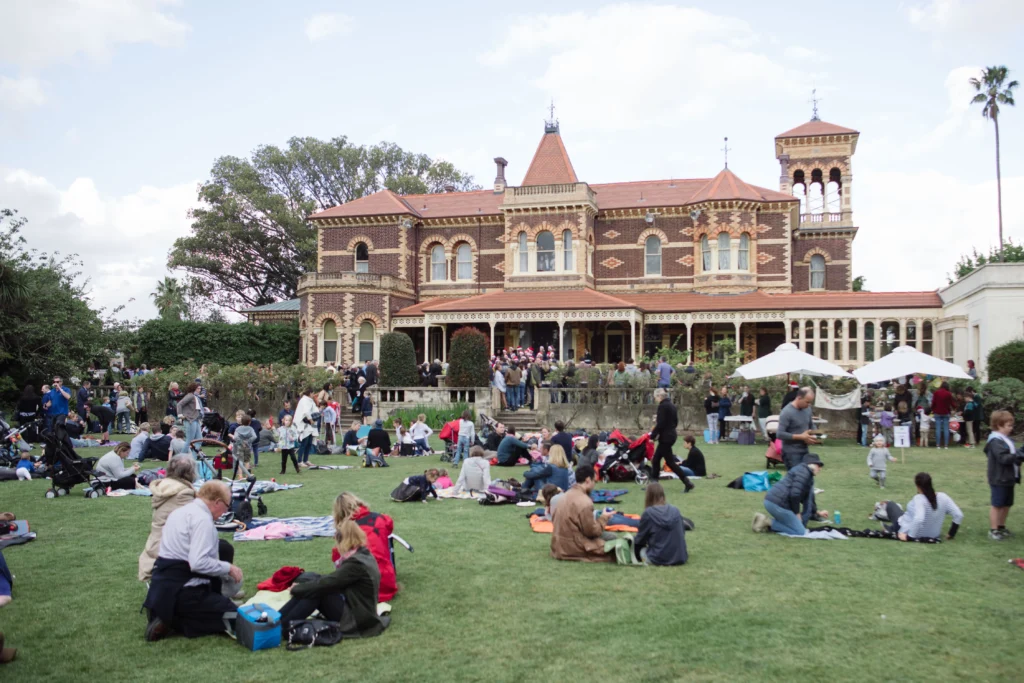
Rippon Lea Estate
Throughout the 1960s The National Trust was the loudest voice raised in protest against the loss of heritage in Victoria. Before heritage preservation legislation, the only secure way to preserve a place was to own it.
As she witnessed the demolition of many significant buildings and gardens across Melbourne, Louisa Jones knew she must act to ensure the safety of her family’s estate in Elsternwick, the nationally significant Rippon Lea.
In 1954 Louisa was overseas when another family member sold off part of the site to the Federal Government, who intended to demolish much of the gardens to expand the ABC studios next door. Later, the Federal Government informed the family that they would be compulsorily purchasing an additional 1.7 hectares of Rippon Lea’s grounds, including the lake area, lookout tower, waterfall and grotto.
This led to the longest preservation battle of the decade, as Louisa was determined to leave the entirety of the estate to the National Trust as a gift to the people of Victoria. There was immense public outcry at the government’s plan, and the rally for Save Rippon Lea drew a crowd of 10,000 people. After years of legal battles we finally acquired the estate, saving the site from demolition and preserving another public space for the community to enjoy.
Today, Rippon Lea is a vibrant space, hosting exhibitions, festivals and family friendly events. Thanks to the support of Councils, local residents have free access to the gardens, many of whom do not have their own green spaces in the busy areas of Glen Eira and Port Phillip. Visitors can picnic under the established trees of the formal gardens, visit the birdlife along the lake, and wander along the meandering paths of one of the country’s largest Victorian-era ferneries, taking in the soothing effects of the trickling streams and hundreds of species of ferns and palms.
1970s
Mount Sugarloaf & Mount Leura
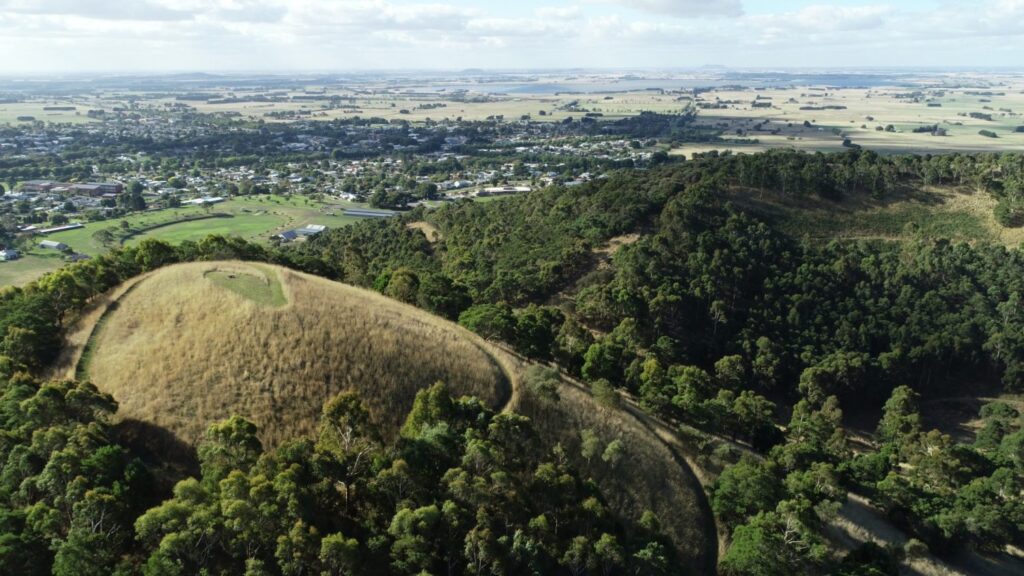
In the late 1960s outrage erupted over a plan to quarry Mount Sugarloaf, part of a nationally-significant volcano complex near Camperdown. Local residents rallied against the plan and went to great lengths to prevent it, with some protestors lying down in front of bulldozers.
The National Trust was the first organisation to assess the Mount Leura and Mount Sugarloaf complex, collectively known as Leura Marr, to be of national significance, due to its unique geology and cultural importance.
The area is the traditional lands of the Leehura (Liwura) Gunditj Clan of the Djargurd Wurrong language group, who names Mount Sugarloaf “Tuunumbee Heear” or “moving moving woman”. Mount Leura and Mount Sugarloaf were used as signalling towers and lookout points.
With a clear network of pathways, the site had active public use and was highly valued cultural landscape. As one of the most prominent features on the Victorian Volcanic Plain (the third-largest volcanic plain in the world), we saw a clear need to protect it.
In 1970 we raised funds to purchase the site, cancelling out the quarry licence and offering permanent protection. It was the first National Trust site acquired for its landscape value and is possibly the first example of direct community action saving a nature feature in Australia.
Thanks to the tireless work of volunteers, today it is the site of major revegetation activities, including many endangered flora species that were once widespread across the Victorian Volcanic Plains.
1980s
Significant Trees
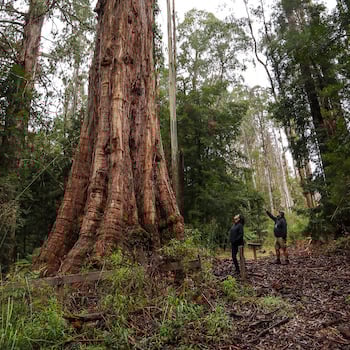
As heritage laws began providing some protection to significant buildings in Victoria, trees were being cleared at an alarming rate, with little legislation to safeguard them. The National Trust had the vision to understand the built environment was only one aspect of important cultural landscapes, and saw an urgent need to begin cataloguing the significant trees of Victoria.
In 1981 we created the National Trust Significant Tree Register, with the purpose of identifying the state’s most exceptional trees, in order to improve their management, demonstrate their value to the community and advocate for their protection. Beginning in Victoria, this later expanded to other states and territories, and led to the creation of the national website Trust Trees.
Since the creation of the Significant Tree Register in 1981, we have classified over 30,000 trees across 1500 places in Victoria.
We have won statutory protections for thousands of significant trees by advocating for local planning scheme amendments, and leading and supporting community action.
It is only through the support of our members that we can continue to be the leading advocate for tree protections in the state, and fight to protect and care for our most significant trees.
1990s
Public Art
The 1991 destruction of Karl Duldig’s ‘Progress of Man’ and its counterpart ‘Abstract’ from the office complex at 505 St Kilda Road drew public attention to the tenuous existence of public art – and sparked the realisation that no organisation was specifically concerned with its protection.
The National Trust saw public art as an essential part of Victoria’s cultural landscapes, an element as worthy of heritage assessment as architecture, gardens and trees. In response, we established a Public Art Committee, and began classifying public artworks across Victoria for inclusion in the National Trust Heritage Register.
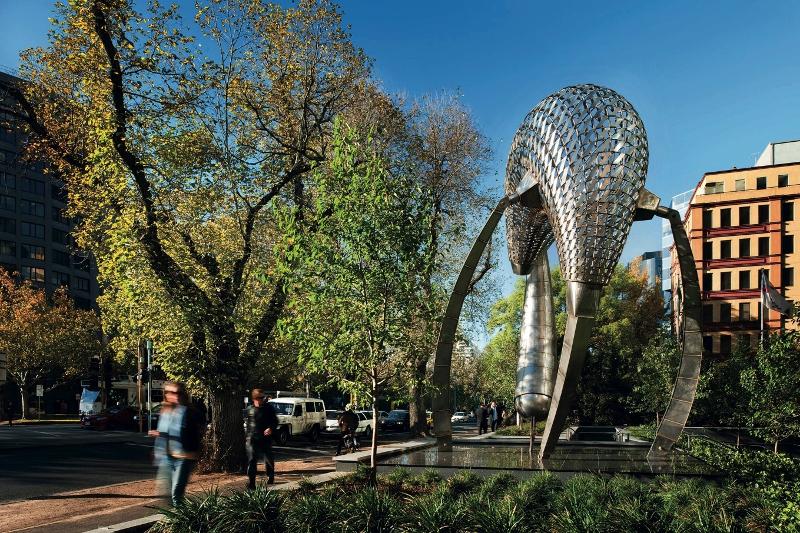
As of 2021 there are over 100 works classified on the Register under the designation of ‘public art’, including sculptures, fountains, mosaics, stained glass windows, monuments and memorials. with the most recent artwork added in 2018: the 2008 sculpture Orion by artist Geoffrey Bartlett, located at 428-430 St Kilda Road.
Over the past 30 years there have been many wins, losses and compromises, and in some cases public artworks that were identified and preserved by the Public Art Committee in the 1990s are now in need of renewed attention. This includes Inge King’s late modernist public sculpture Forward Surge, installed on the Victorian Arts Centre lawn in 1981.
In 1996 it was announced that the work would be relocated to make way for a new outdoor auditorium. Following an advocacy campaign launched by the Public Art Committee, including the preparation of protest letters, media attention and a deputation to the Arts Centre management, the proposed relocation did not go ahead.
We continue to advocate for significant public art to be protected and understood as a valuable feature of our built environment.
2000s
Skipping Girl Vinegar Sign
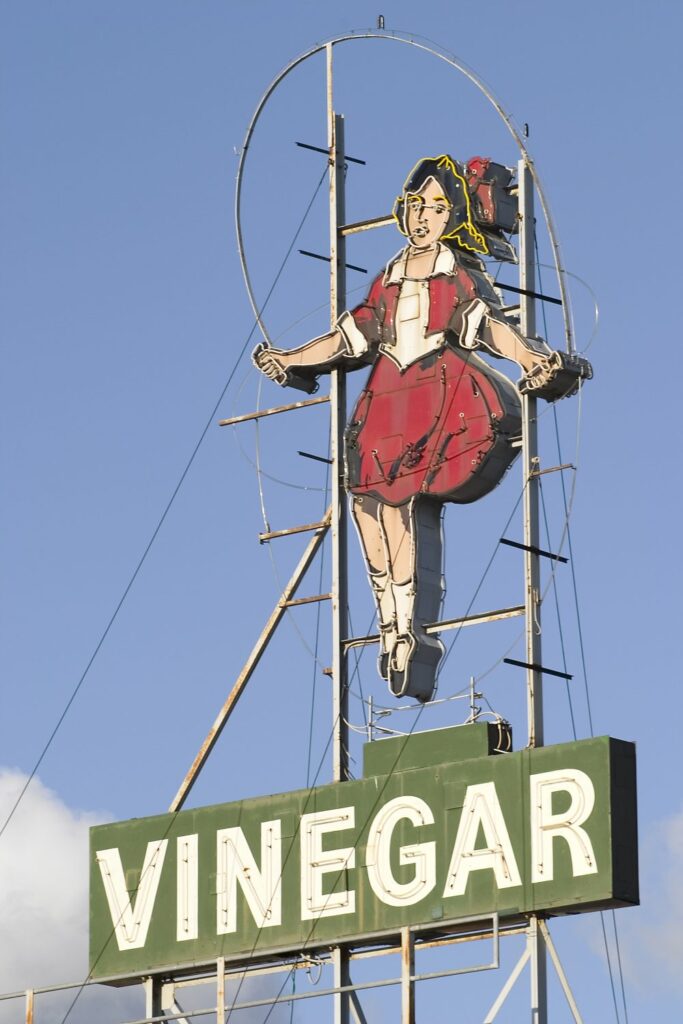
For 85 years, the Skipping Girl Vinegar sign, or “Little Audrey” as she is affectionately known, has dazzled the Melbourne skyline. Though she is now one of the city’s most iconic images, adorning postcards, tea towels and posters, she only continues to skip today due to advocacy from the community and the National Trust.
The original sign was erected in 1936 at 627 Victoria Street, Richmond, to promote the vinegar produced by Nycander & Co. It was the first example of an animated neon sign in Victoria, and became the most prominent and popular sign in Melbourne.
In the late 1960s, Nycander & Co. moved to Altona, and the original sign was removed and subsequently disappeared. After public outcry at its loss, John Benjamin offered the use of the Crusader Plate factory rooftop at 651 Victoria Street – just 200m along from Nycander – for a token rental, and a reproduction of the sign was constructed. It was first illuminated at a ceremony in 1970.
During the 1980s, the sign went dark as the site changed ownership. The neon was eventually restored, but began to deteriorate over time. Noting the sign’s deterioration, and its social, historical and landmark significance, in 2007 we launched a campaign to have Little Audrey heritage-listed and restored to her former glory.
AGL Energy became the principal sponsor of the restoration, with additional grant support from the Heritage Council of Victoria and the Melbourne Heritage Restoration Fund, and public donations. In 2009 the restoration was complete, and in 2012 she was converted to solar power by AGL, which will keep her skipping for years to come.
Since the restoration we have continued to advocate for the protection of Little Audrey. In 2016, we won a VCAT appeal objecting to a proposed apartment tower next door to the sign, which would have blocked views to the neon landmark. VCAT agreed with the National Trust, and the development was set back from the street frontage to ensure view lines of the sign down Victoria Street.
Today, Little Audrey is protected through inclusion in the Victorian Heritage Register, and is one of Melbourne’s most famous landmarks, providing a tangible link to the city’s industrial heritage. Learn more about our partnership with AGL below.
2010s
Fedaration Square
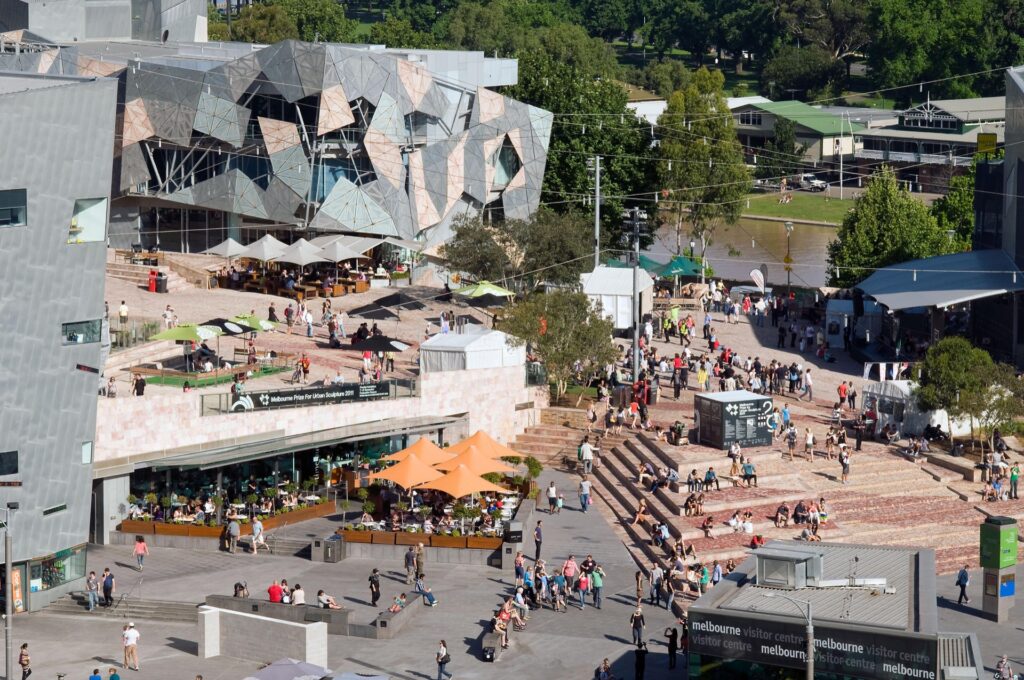
In 2017, The Andrews Labor Government announced that tech giant Apple had finalised a deal to demolish the Yarra Building, the main built structure at Federation Square and the home of many of Melbourne’s cultural institutions and events, to make way for their new retail store. The deal was made with Federation Square management, without public consultation or any long-term plan for the future of this culturally significant place.
The National Trust spearheaded the campaign for Federation Square’s protection by nominating the place to the Victorian Heritage Register (VHR), in order to recognise the site as a place of historical, architectural, aesthetic and social significance, and protect the cultural values it embodies.
We submitted the nomination following 12 months of consultation with heritage and architectural experts, who collaboratively determined the heritage values of Federation Square were worth protecting.
Following a long campaign with support from community advocacy group, Citizens for Melbourne, Federation Square was included in the VHR in 2019 and afforded statutory protection under the Heritage Act.
Our key aim in nominating Federation Square to the VHR was always to ensure that its heritage values would be protected in any future development process.
We did not oppose commercial activation and development at Federation Square which would respect its cultural and architectural significance. However, Apple’s proposal fell far short of meeting these aims.
The nomination of Federation Square to the VHR provided a vital opportunity to reflect on its cultural and architectural significance to the state, as well as its civic role and function.
It also brought the government to the discussion table. In 2019, the Department of Jobs, Precincts and Regions commissioned a consultation to inform a review of Federation Square’s operating model. The review outlined community and stakeholder consultation findings, which reinforced the view of the National Trust that the role and purpose of Federation Square needs to be strategic, city focused, and civic minded into the future.
Our actions have ensured that the community have a voice in the management and planning of Federation Square, and that this place will be protected for future generations.
2020s
John Curtin Hotel
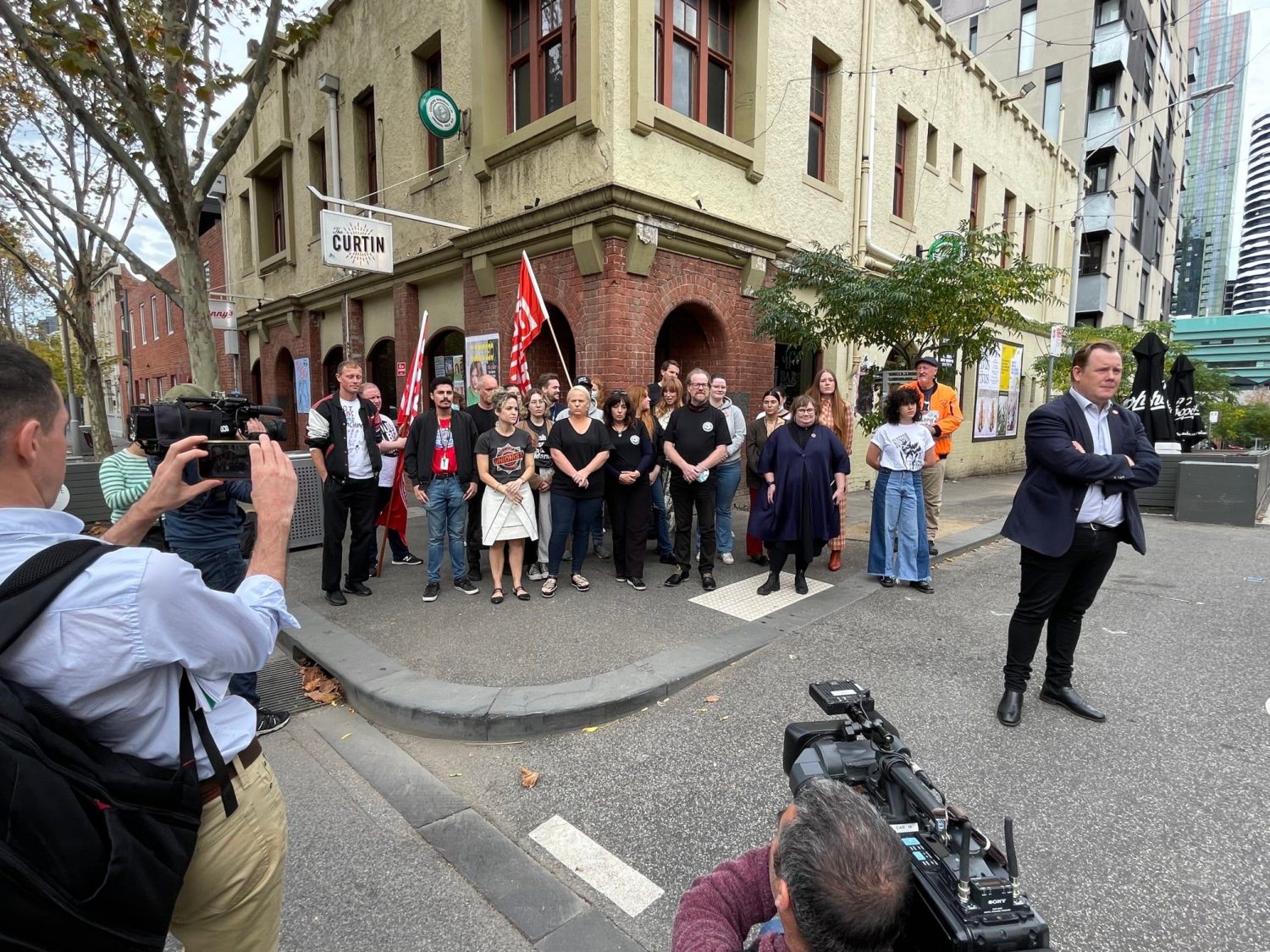
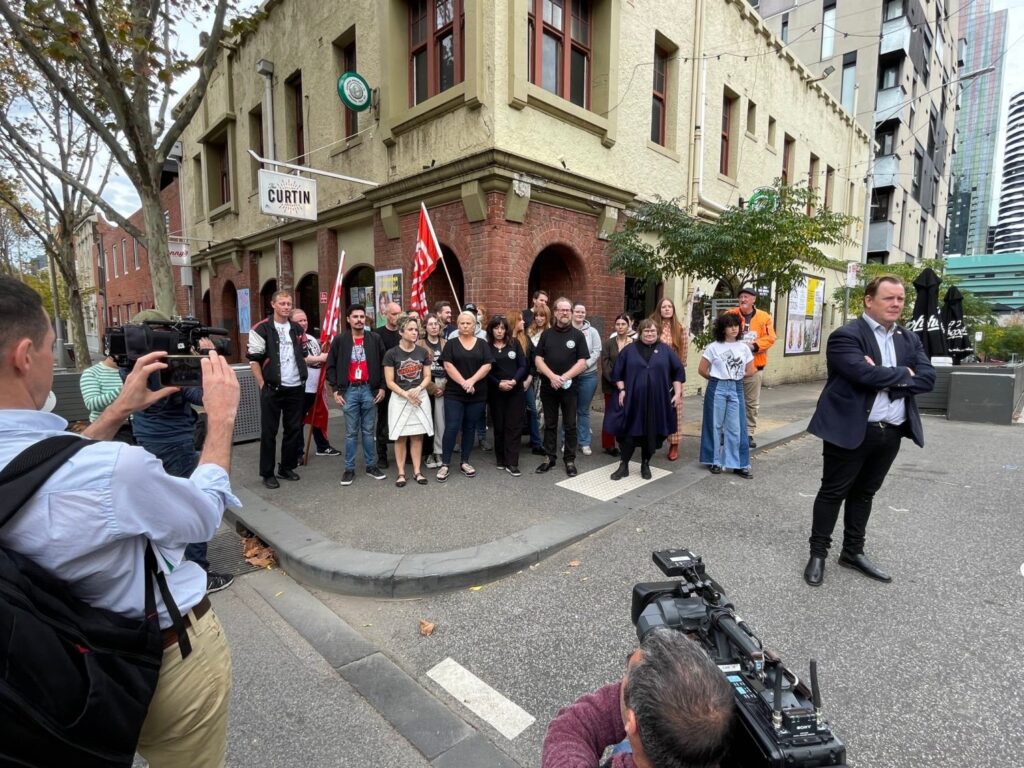
In 2022 we joined the Victorian union movement to safeguard the John Curtin Hotel, which was being sold to overseas developers. We jointly nominated the Curtin to the Victorian Heritage Register for social significance as an important meeting place, located across the road from Melbourne Trades Hall.
Our efforts were successful, and the community movement to save the pub resulted in a ten year lease between the new owners and publican so the iconic Melbourne hotel could remain in operation as a pub and live music venue.