
Why was the Gaol built?
Victoria was not used as a convict settlement. Those who were brought to work here from the other colonies were housed and fed by the settlers they had been assigned to.
- So why did the settlement at Port Phillip need such a large prison complex?
- What problems arose as a result of the new colony’s rapid growth?
- And when and why did the Melbourne Gaol close?
Please note that images and names of deceased Indigenous people are contained within this webpage.
Early gaols & lock-ups
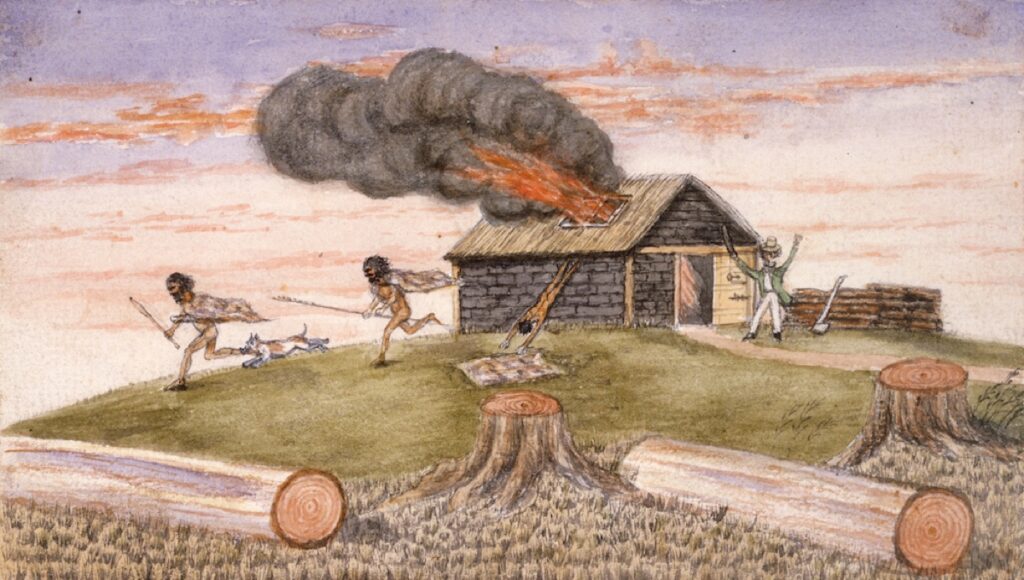
During Melbourne’s first years law-breakers were incarcerated in small, often wooden, lock-ups. These were poorly built and became unfeasible as the population grew. Melbourne’s first gaol was burnt down by Tullamareena – a senior man of the Wurundjeri people – who escaped after he had been arrested for sheep stealing.
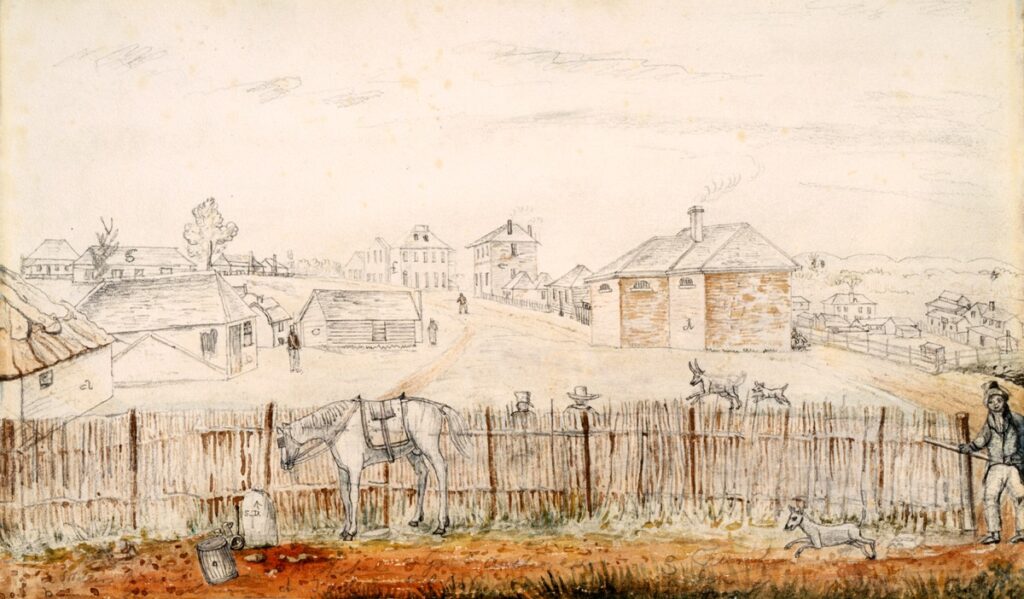
With no purpose-built gaol available, Superintendent Lonsdale had to rent a sturdier building in which to house prisoners. However, poor ventilation and only two rooms meant that prisoners spent much time outside in the yard, which wasn’t very secure. Escapes were common.
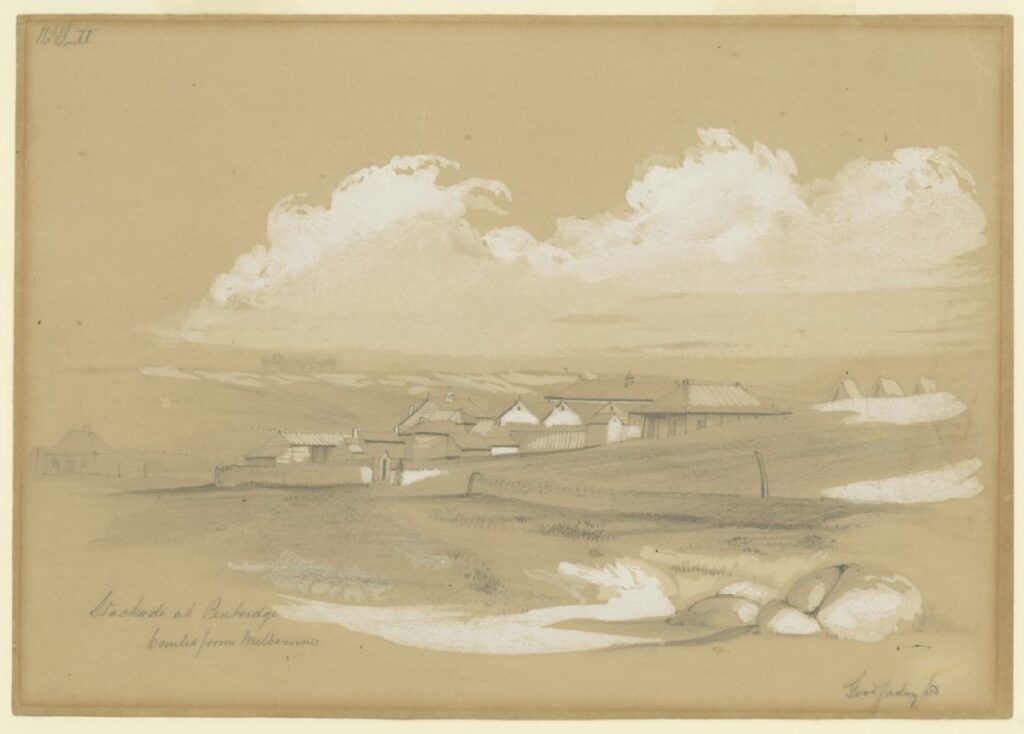
Stockades were an alternative to prisons. These were usually log huts behind fences and built by prisoners. The first stockade was at Pentridge, the original name for the suburb of Coburg. Its purpose was to provide labour for the construction of the newly proclaimed Sydney Road. Prisoners could do hard labour breaking up stone and road building.
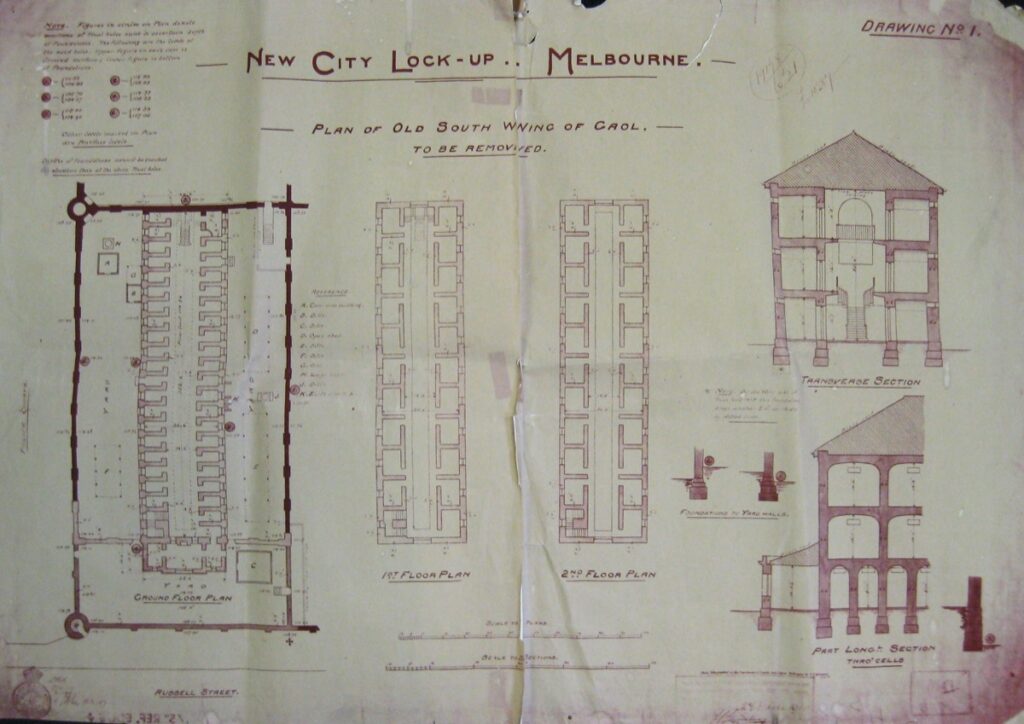
In 1841 work began on a permanent gaol, erected on a block of scrubland fronting a dirt track that was to become Melbourne’s Russell Street. A single cellblock, it opened in 1845 with 59 male and 9 female prisoners housed inside. At that time prisoners convicted of serious offences, like murder, were still being sent to penal establishments in New South Wales.
Population explosion
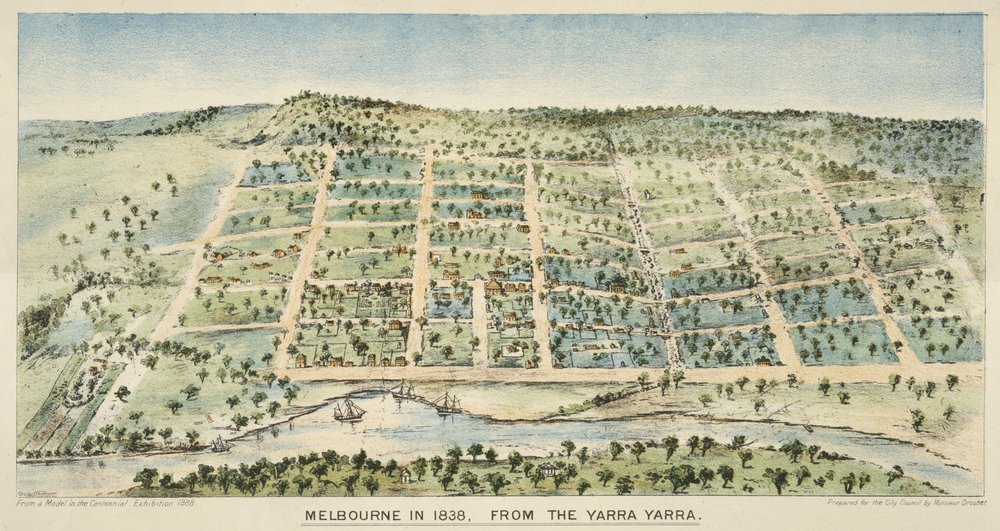
In 1851 the Port Phillip District of New South Wales became the new colony of Victoria. Discovery of gold that same year provided the new government with its first major challenge. Compare this depiction of Melbourne in 1838 with the following image from 1855.
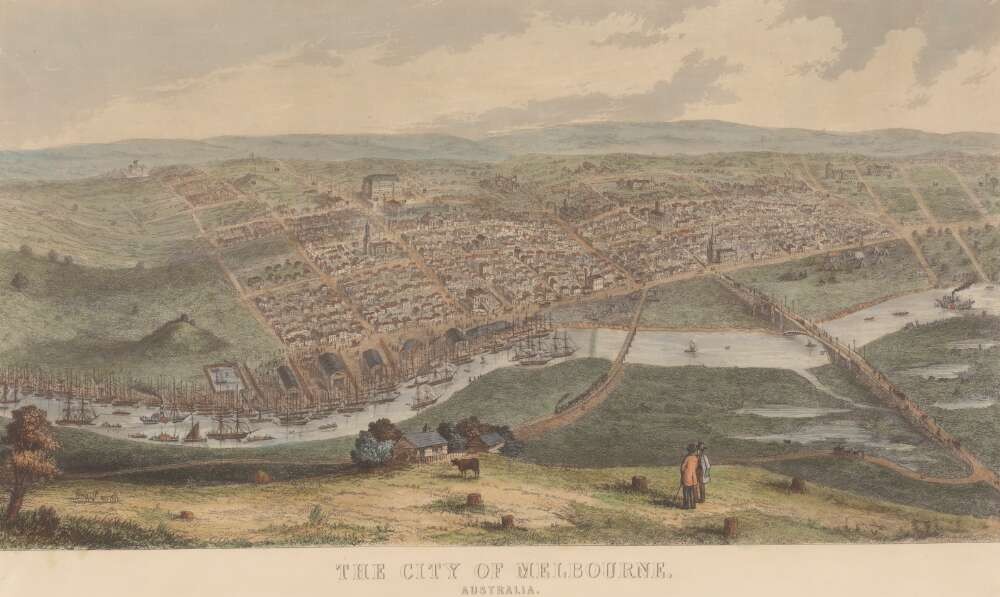
Between 1851 and 1854, the population of Victoria grew from 77,000 to more than 200,000. By 1858 half of Australia’s population was in Victoria. This is what Melbourne looked like only twenty years after its establishment, and only three years after the discovery of gold.
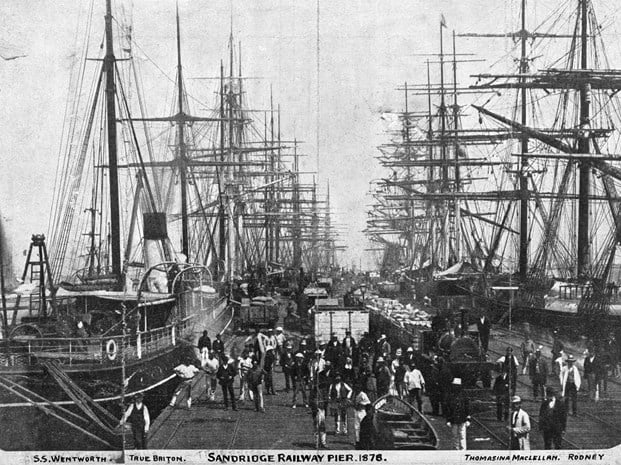
The gold rushes transformed the rural convict colony into a first choice destination for free migrants. Europeans, North Americans, South Americans, Indians, Chinese and Africans were among the thousands who answered the call of Australian gold.
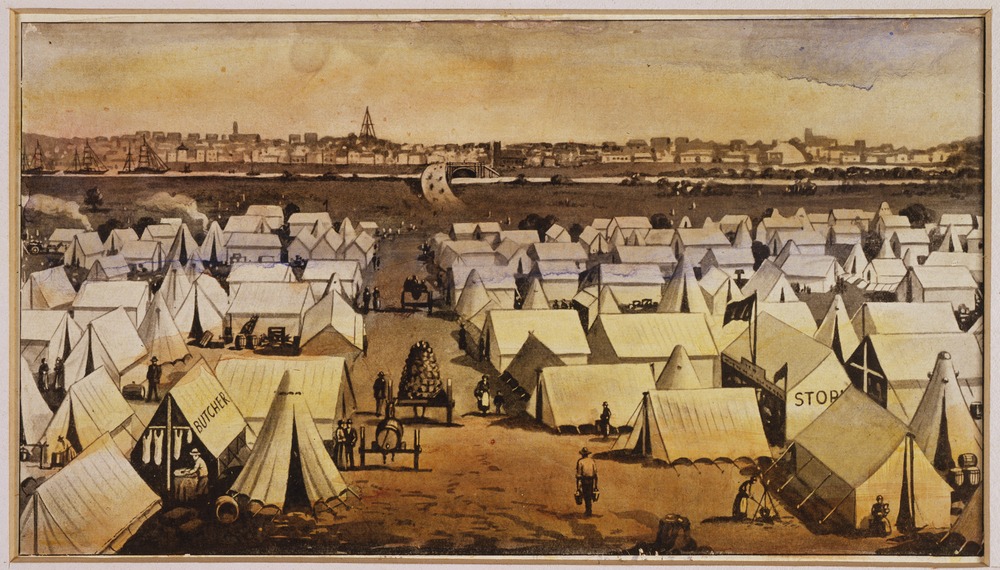
Melbourne was unable to accommodate the huge numbers of people arriving during the gold rushes. In South Melbourne a tent city, known as Canvas Town, was established. The area soon became a massive slum, home to tens of thousands of migrants from around the world. Life was hard and the crime rate increased.
Social change
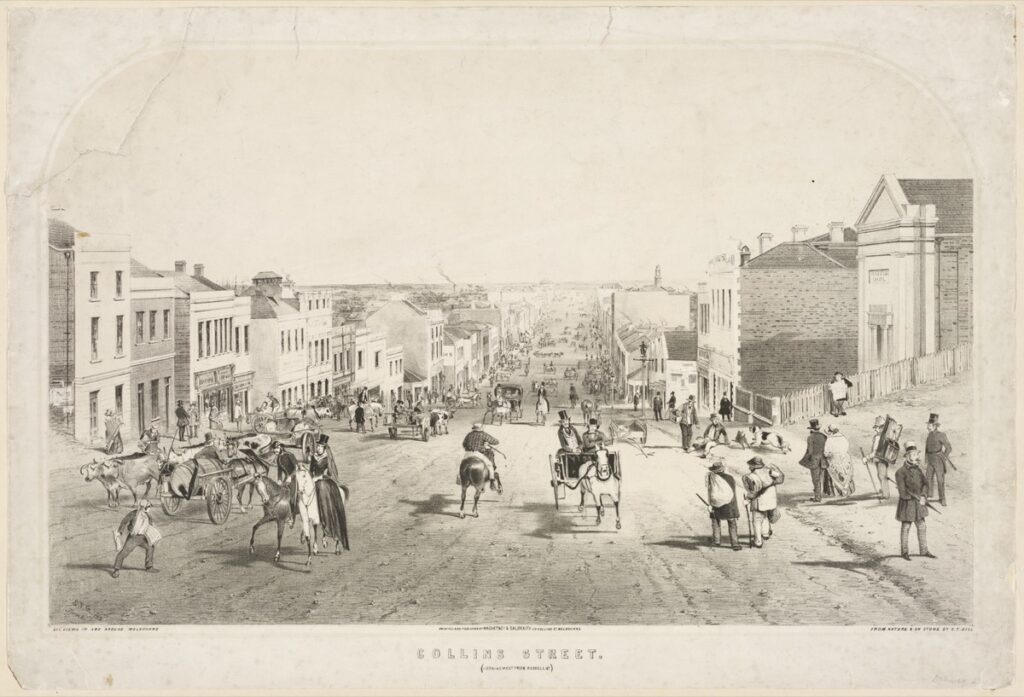
The gold rushes brought rapid change to Victoria. New immigrants came with a wide range of skills, professions and lifestyles, which proved invaluable to the economy and transformed society. But prosperity wasn’t the only thing that gold brought to the colony. It also attracted reckless characters wanting to capitalise on this great opportunity.
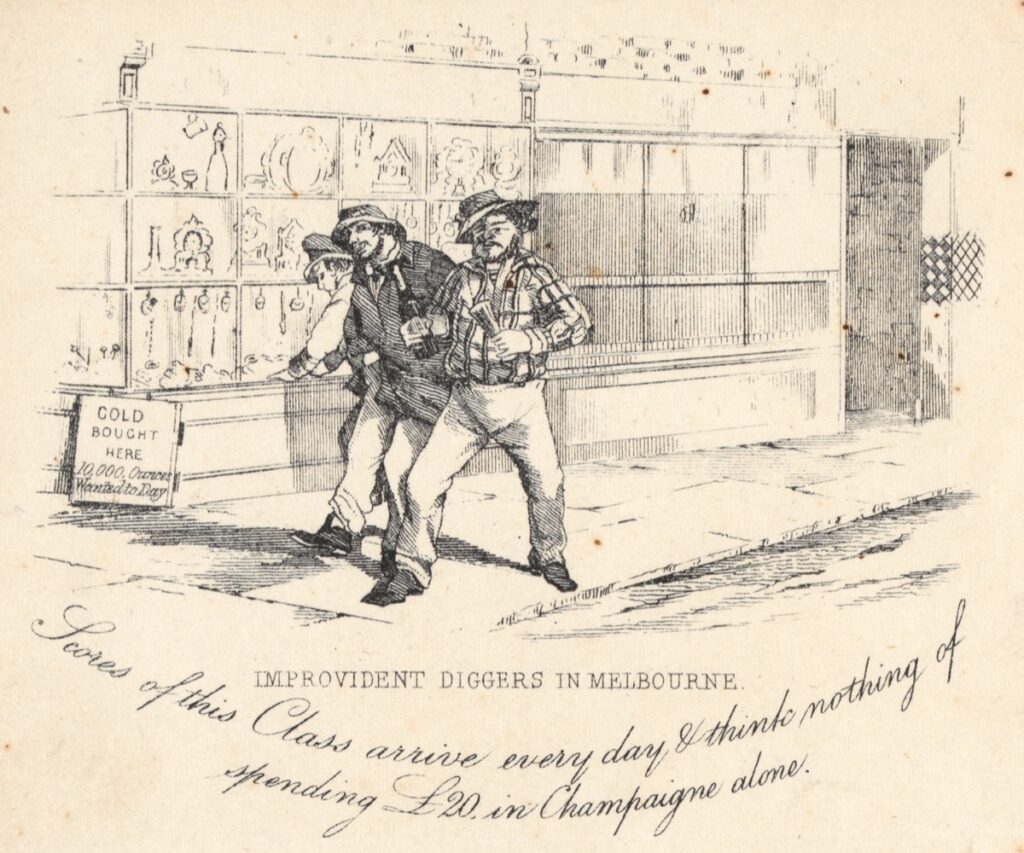
The lure of gold provided the chance to break free of old class-based bonds. Those who struck it rich on the goldfields returned to Melbourne relishing this reversal of social fortune. Some went around lighting cigars with banknotes, others made mock offers to buy property from former employers. Ordinary social rules were turned upside down by the ‘digger aristocracy’.
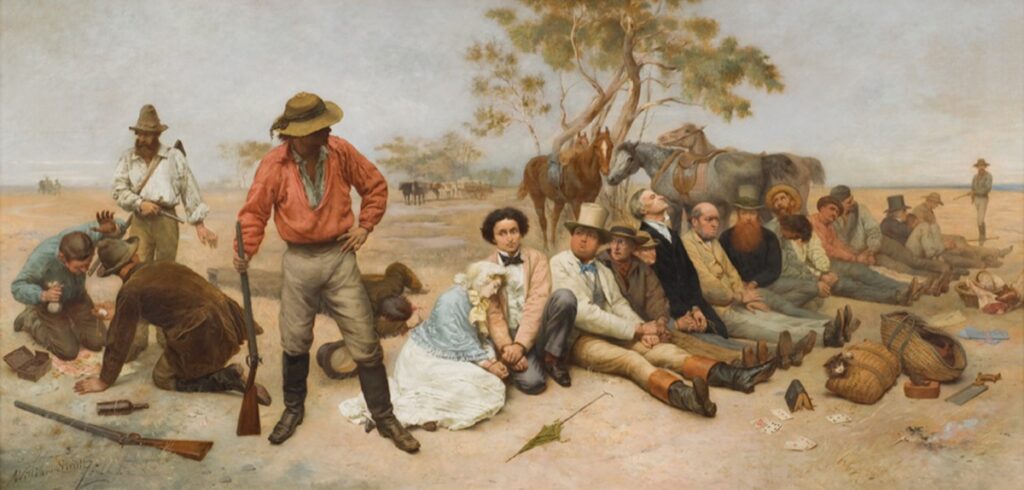
Among those seeking their fortune were ex-convicts, bushrangers and swindlers, who made life on the diggings and surrounding roads hazardous. Armed robberies were common. To make matters worse for the authorities, in 1851 all but two of Melbourne’s 40 police officers resigned and then took off to the goldfields to try their luck.
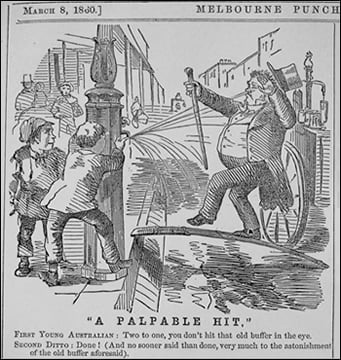
The gold rush brought wealth to some but bitter disappointment to many. The reality of returning from the diggings penniless, with nowhere to live and perhaps a family to support was all too common. Melbourne was now a large international city and the gap between rich and poor was growing.
Prison system develops
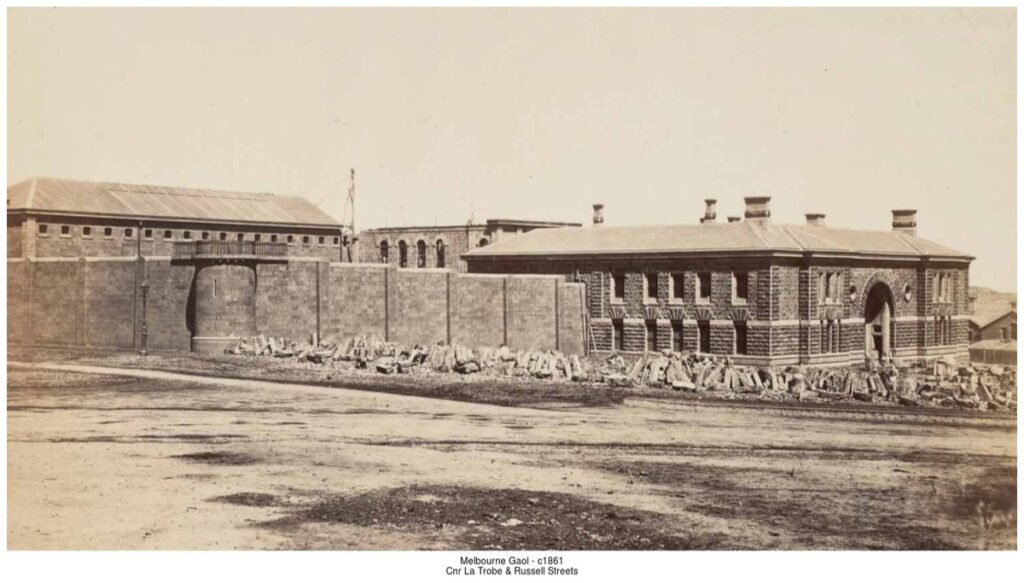
Almost as soon as it opened work began on extending the Melbourne Gaol to accommodate more prisoners. Over the next twenty years the Gaol continued to be developed into a large complex. But initially work was slow due to a lack of government funds and a shortage of labour – too many people had left Melbourne for the goldfields.
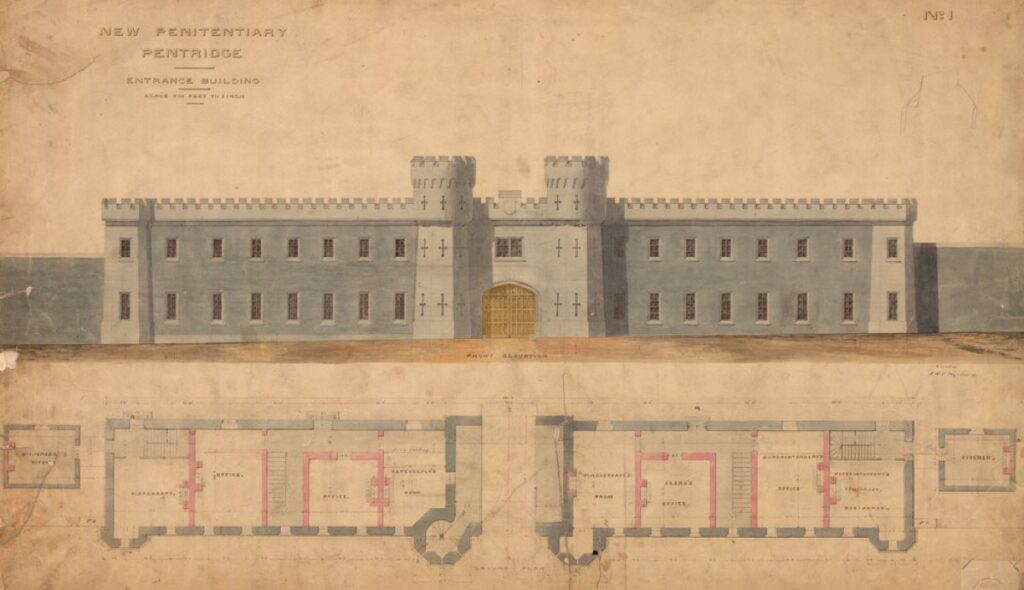
Five years after it opened the Melbourne Gaol was so hopelessly overcrowded that the government needed to find other solutions to the problem. More stockades were built around Melbourne in Richmond, Collingwood and Williamstown. Work also began on converting Pentridge into a larger, permanent prison.
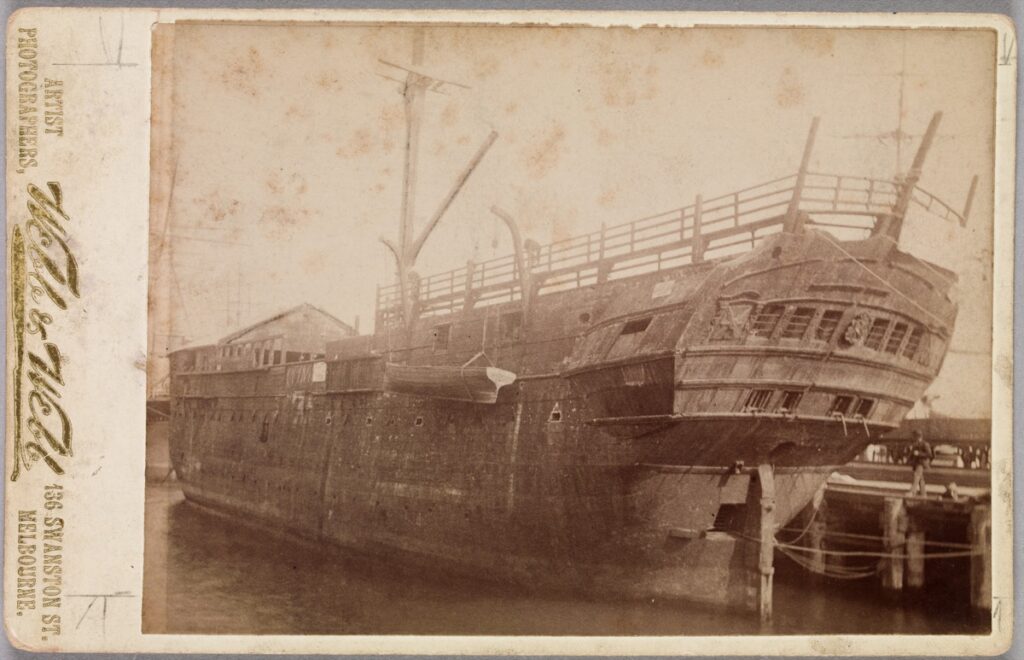
Ex-cargo ships (known as hulks) had previously been used in Britain to house convicts awaiting transportation to Australia. To help ease the overcrowding problem in Victoria in the early 1850s the government commissioned five hulks to be converted into floating prisons. These were anchored off Williamstown in Hobson’s Bay.
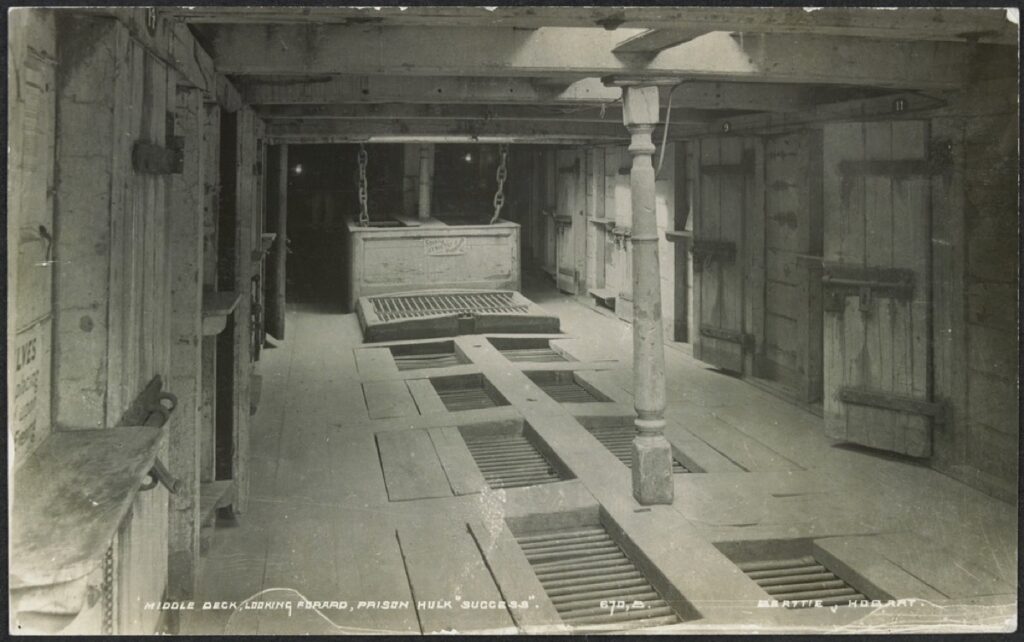
As in the stockades, prisoners kept on the hulks were often employed on public works during the day. But the hulks were for the worst offenders and they were intended to be a deterrent to others. Conditions were harsh – prisoners were kept in irons below decks and could be sent to solitary confinement in dark cells below the waterline.
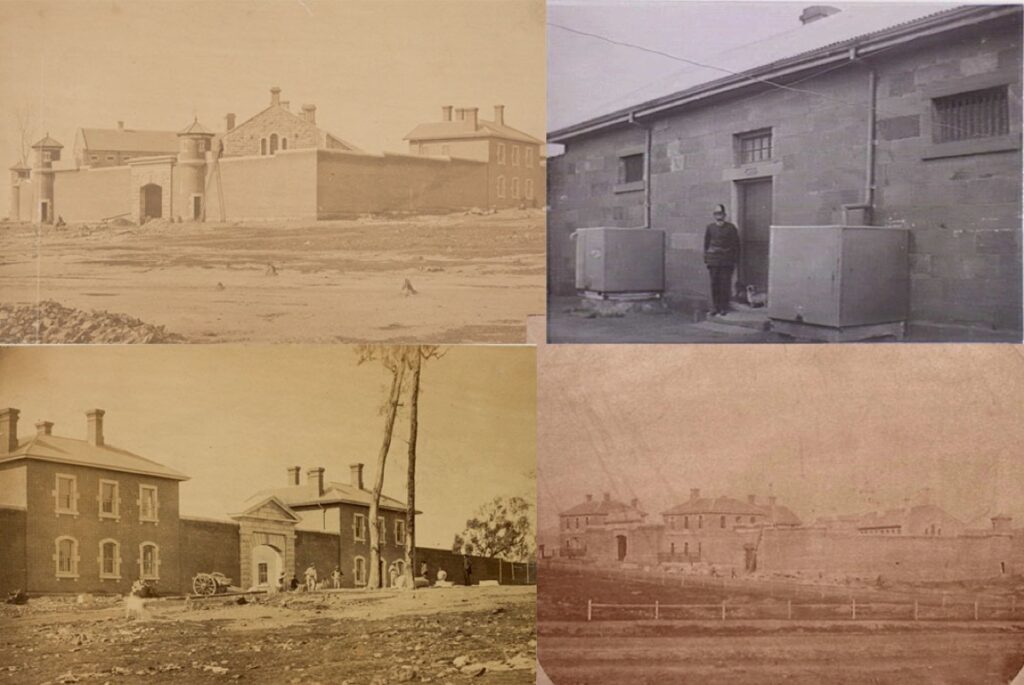
People leaving the city to go to the goldfields meant that centres of justice needed to follow. Gaols soon became part of the goldfields landscape. In the years following the gold rushes permanent prisons were erected in Ballarat, Castlemaine, Bendigo, Beechworth, Ararat and Geelong.
Melbourne Gaol closes
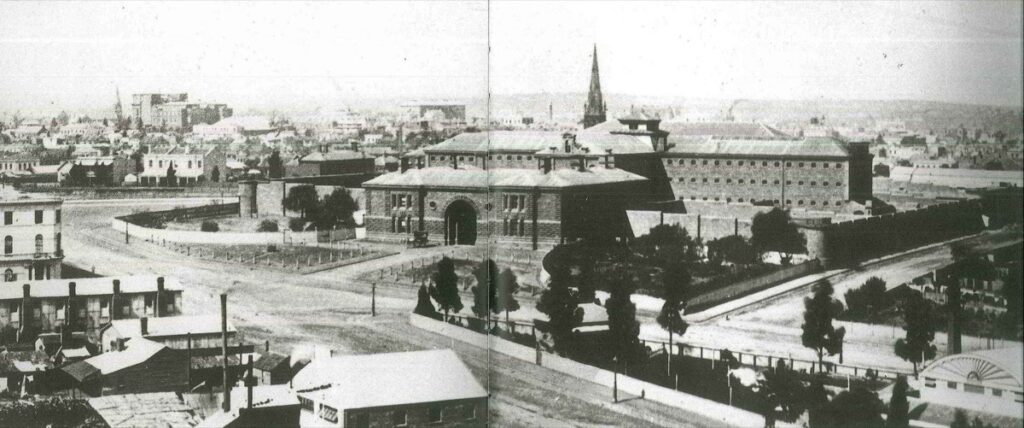
By the time the wall was completed around the Gaol in 1864 the site stretched across an entire city block. Within the walls were three triple-story cellblocks, two hospitals, a chapel, bathhouse, laundry, gatehouse, exercise yards, work yards and Governor’s residence. A row of warders’ houses was built alongside the Gaol between Bowen and Swanston Streets.
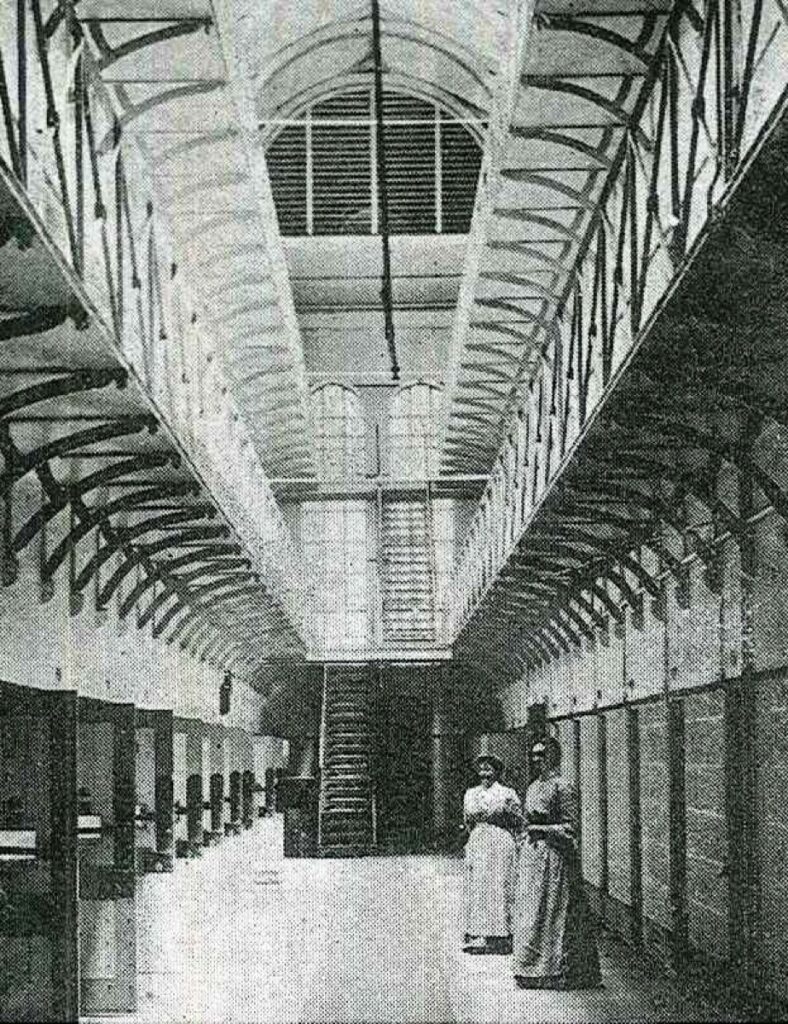
But despite its size, the Melbourne Gaol had been intended to receive prisoners on remand or short-term sentences. It quickly became a place for those serving longer terms and persistently suffered from overcrowding. As early as 1870 recommendations were made to remove prisoners to Pentridge where extensions were already underway.
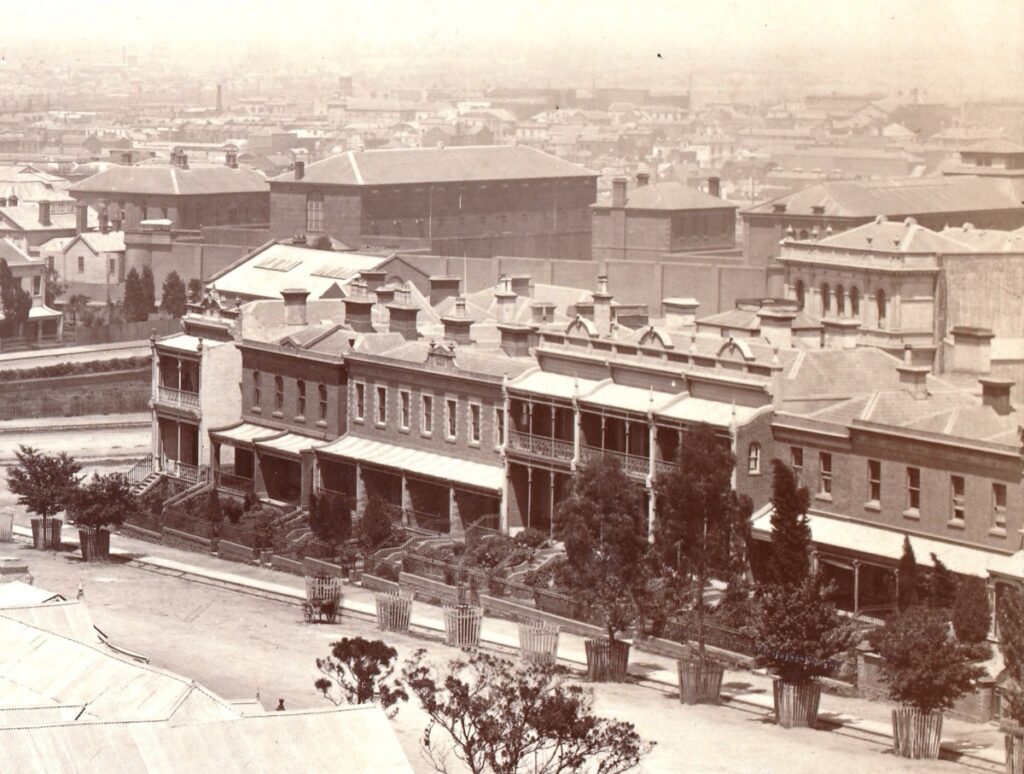
There had been criticisms about the location of the Melbourne Gaol from the outset. However, by the end of the Nineteenth Century the Gaol occupied valuable land in the centre of a large city,blocking opportunities for development. The gaol was also surrounded by residents who felt that it brought the value of their properties down.
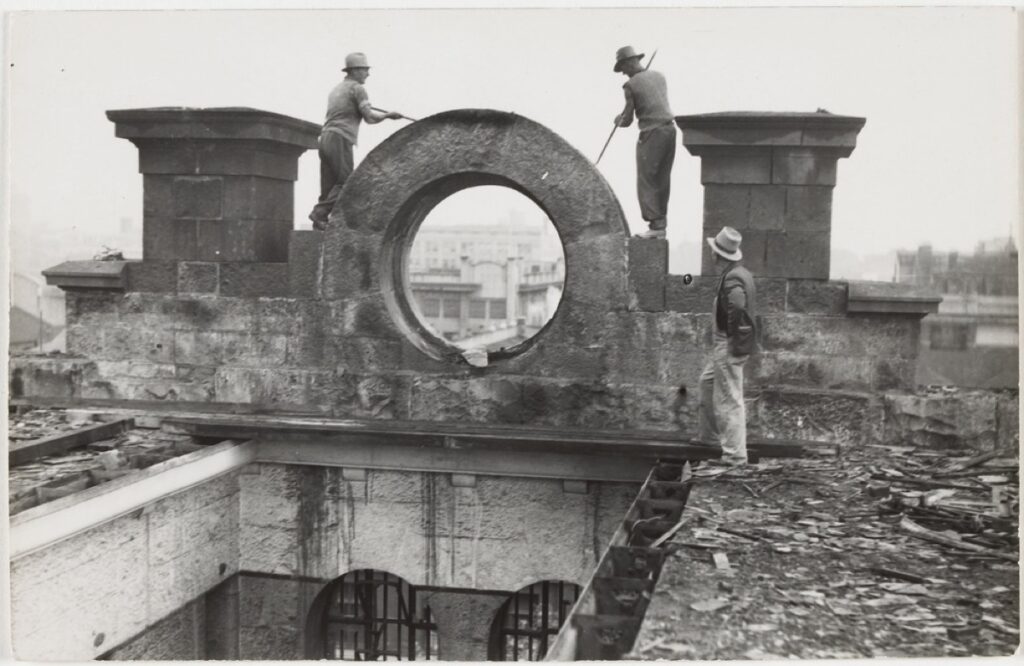
By the early Twentieth Century fewer prisoners were serving time in the Gaol. Demolition began in 1908 when the original cellblock was removed to make way for the new City Watch House. The last prisoner left in 1924 and the site was transferred to the Public Works Department for further demolition. Pentridge was now Melbourne’s main prison.
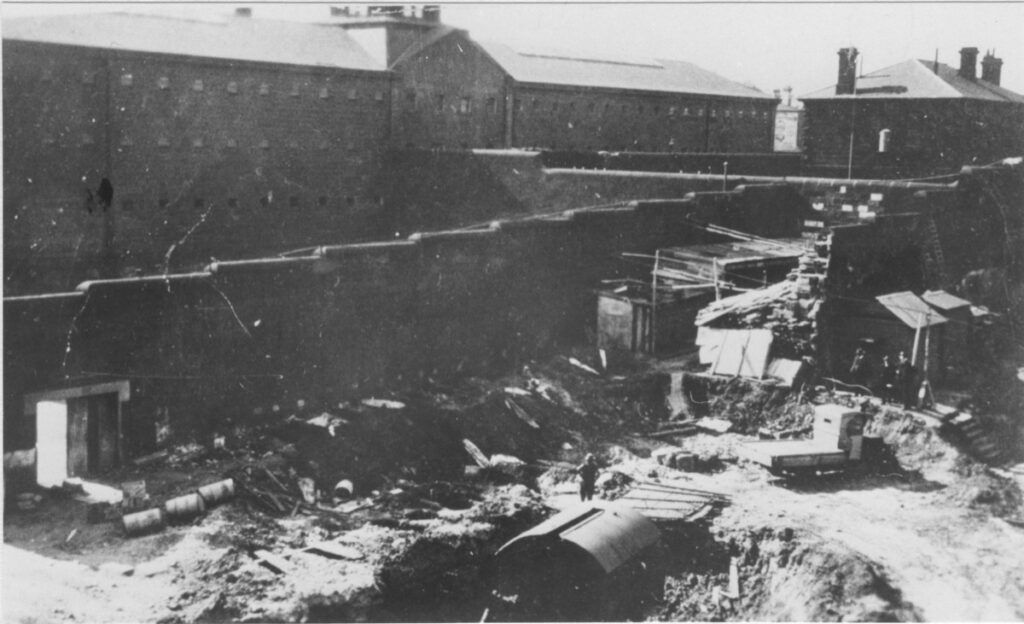
In 1929 demolition work uncovered the bodies of executed prisoners buried in the old Gaol cemetery. The remains of 46 prisoners were subsequently removed to Pentridge. Four more prisoners’ remains were uncovered during further demolition in 1937. As late as 2002 a skeleton was unexpectedly discovered during landscaping of the park beside the Gaol.
Things to think about
Years 5-6
- Identify the reasons why Melbourne needed a purpose built gaol.
- Suggest why the population explosion, caused by the Gold Rush, led to an increase in the crime rate.
- List the challenges for the Victorian Government caused by rapid immigration growth.
Years 7-9
- Explain the need for an expansion of the criminal justice system during Victoria’s first 50 years.
- Elaborate on the impact that the Gold Rush had on the new colony’s law and order.
- Create a timeline of the establishment and development of Victoria’s prison system (from the first lock-up to the expansion of gaols around the state).
Years 10-VCE
- Explain the association between poverty and crime in relation to the Development boom in Victoria during and after the Gold Rush.
- Comment on how the development, expansion and closure of the Melbourne Gaol (1841 – 1924) reflects the changing needs of the colony of Victoria and its people.
Digital Tools to assist your discoveries
- History in Place Toolkit
- Thinglink
- Telegami
- iMovie
- StopMotion Recorder
- Green Screen by Do Ink
Related Programs
-

Cross-Cultural Program
Students experience two perspectives of how life would have been at McCrae Homestead through European and Indigenous cultural heritage interpretation.