
Then and Now: The Past in Your Class
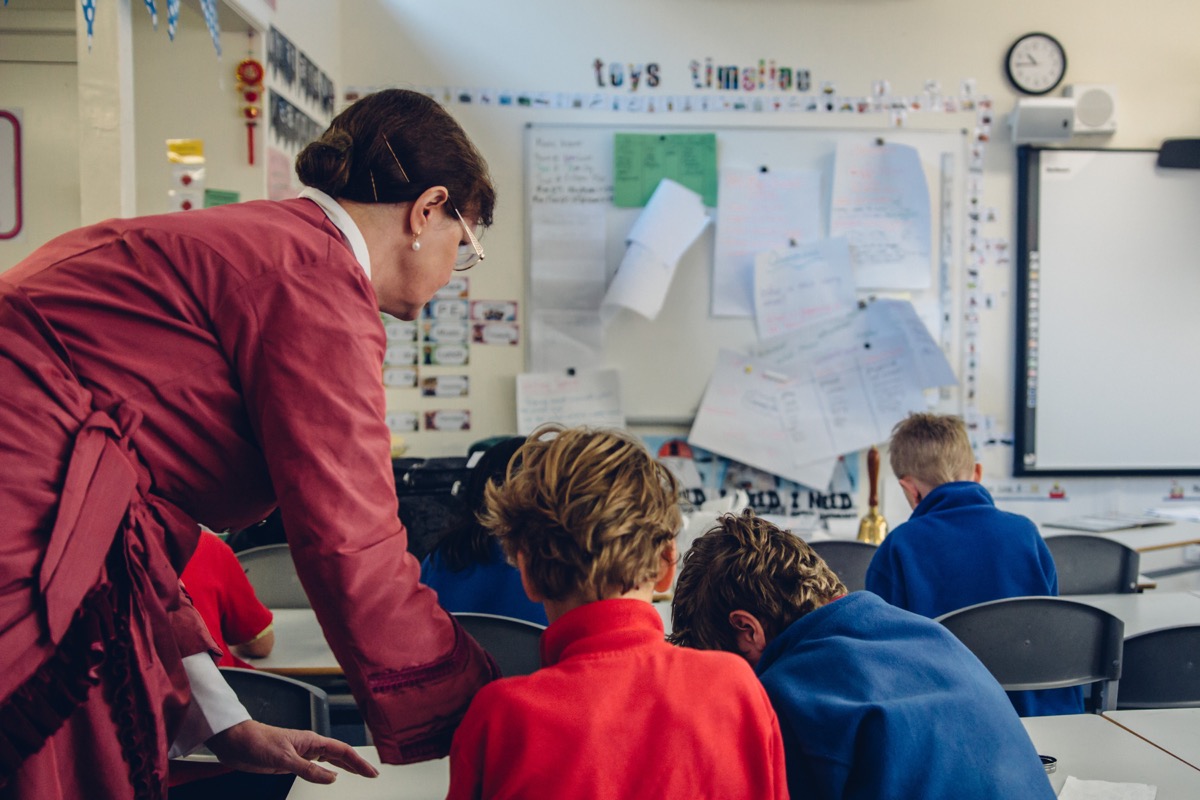
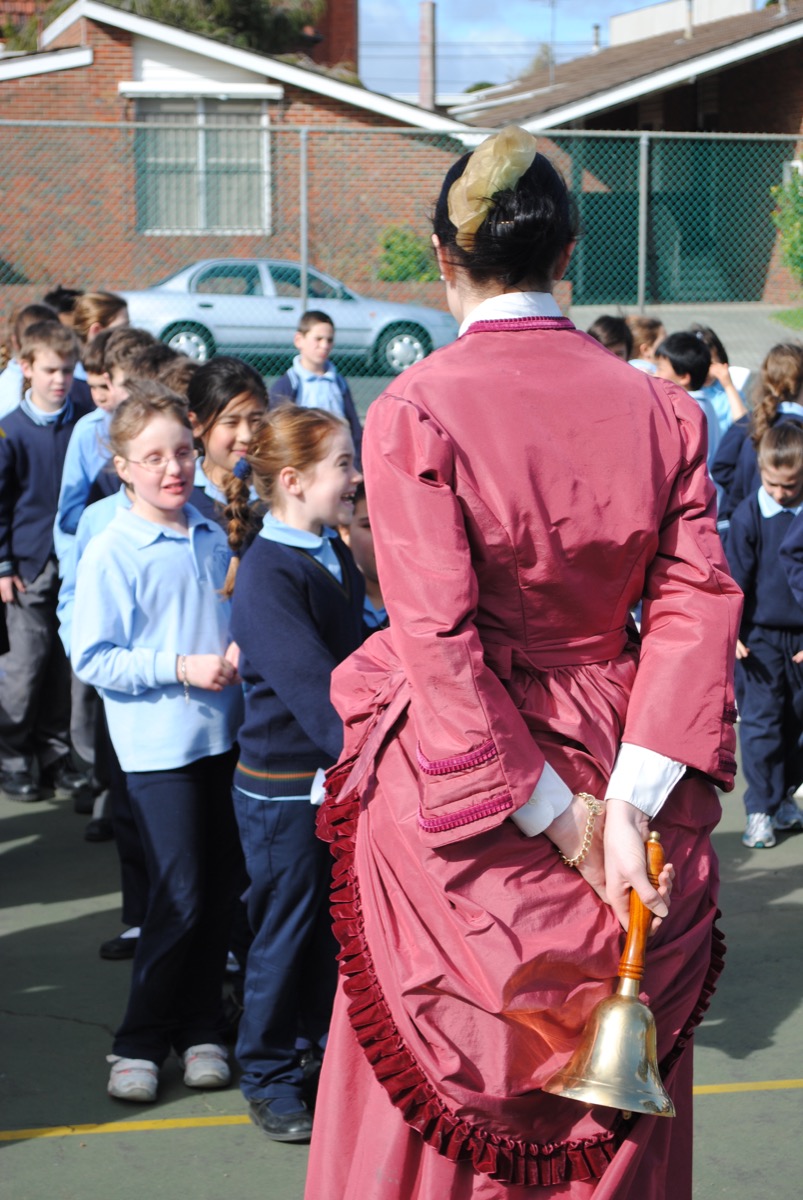

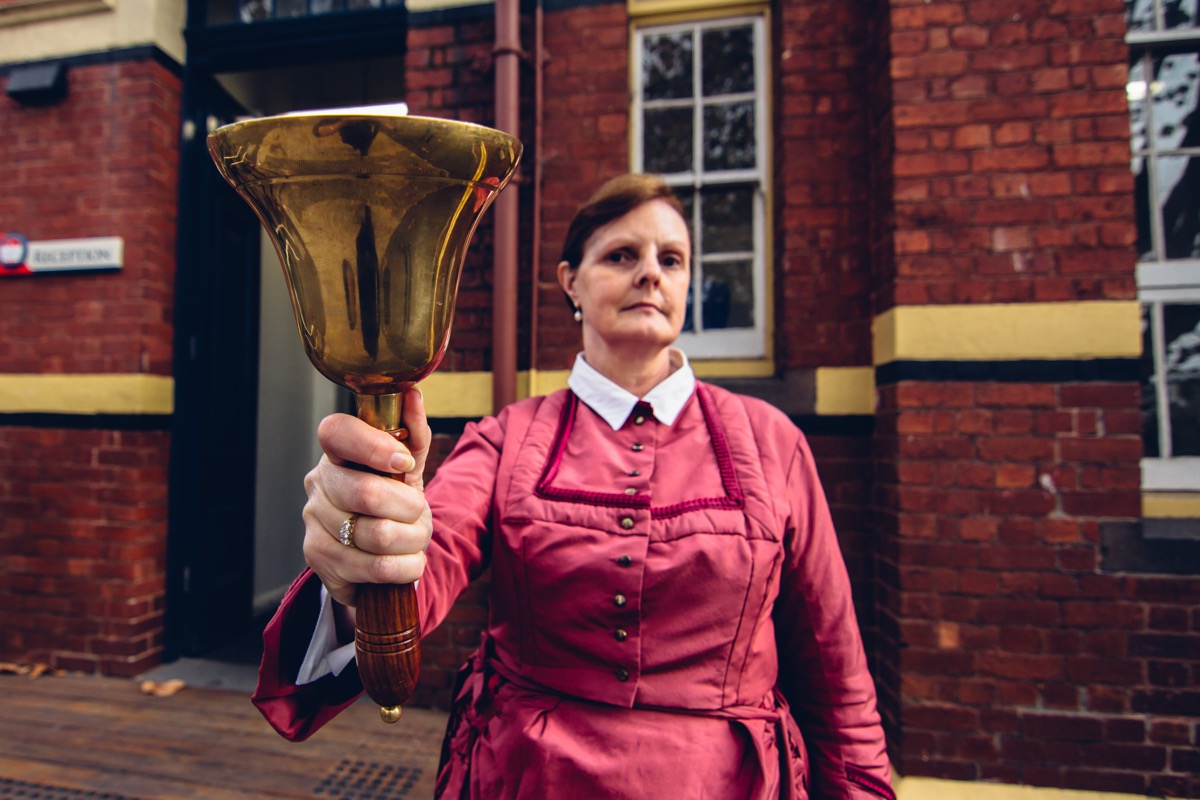
Make history happen in your own classroom and find out what school was like for Melbourne students during the 1870s.
Facilitators can visit your school and deliver up to 3 sessions per day in metropolitan Melbourne and suburbs depending on travel time.
If you cannot visit Rippon Lea this is an ideal option. If you can then this is a great post Rippon Lea excursion activity.
About the Program
Join Mrs. Sargood, the matriarch of Rippon Lea Estate, or Mrs. Ferguson the Sargood children’s strict Governess, as they introduce students to the life of children in the past.
During the incursion, students will compare and contrast their school and home lives to those of the Sargood children of Rippon Lea Estate through question and answer as well as two historical activities.
Curriculum Links
| Subject | Strand | Sub-Strand | Content Descriptions | Students will... |
| History | Historical knowledge and understanding | Personal histories | differences in family structures and roles and how these have changed or remained the same over time VC2HH2K02 | Uncover the societal pressures faced by families in the past, and how the life of the Sargood family differs from families today. |
| differences and similarities between students’ daily lives and how these have changed or remained the same over time VC2HH2K03 | Discover what life was like for some children in the past; the games they played and the social pressures faced, and realise some similarities as well as some differences. | |||
| Community histories | the history of a local historical site of social, cultural or spiritual significance and how it has changed over time VC2HH2K05 | Learn about the social significance of Rippon Lea and how it has changed since the 1800s. | ||
| Historical Concepts and Skills | Continuity and Change | identify examples of continuity and change by comparing the past and present VC2HH2S06 | Compare lives in the 1800s to lives in the present day. | |
| Personal and Social Capability | Social Awareness and Management | Collaboration | simple skills required for collaboration with peers VC2CPFO03 | Work together to solve a mystery during the Creature Catcher activity. |
| broader skills required for collaboration with peers and ways to monitor contributions to group tasks VC2CP2O04 | Work together to solve a mystery during the Creature Catcher activity. |
Program Details
Monday – Friday during school terms.
45 minutes
30 Students per Session.
Teachers will receive a detailed resource pack that includes suggested pre- and post-visit activities upon booking.
$14 per student + plus a flat fee to cover travel costs, calculated based on school location.
Click here to access the Task Risk Assessment.
Please advise our bookings team if your students require wheelchair-friendly access; some accommodations can be made. The mansion has a set of stairs which is not accessible.
To book, complete the Online Booking Form. For enquiries, email [email protected] or phone (03) 9656 9889.
Related Programs
-
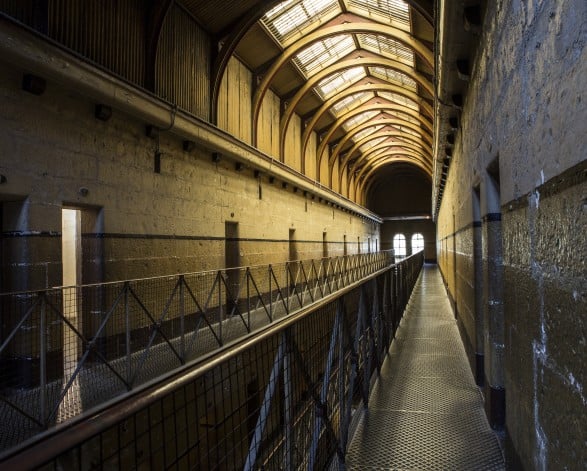
3D Interactive Court Room
Try visiting the interactive Court Room to get an idea of how a court works.
-
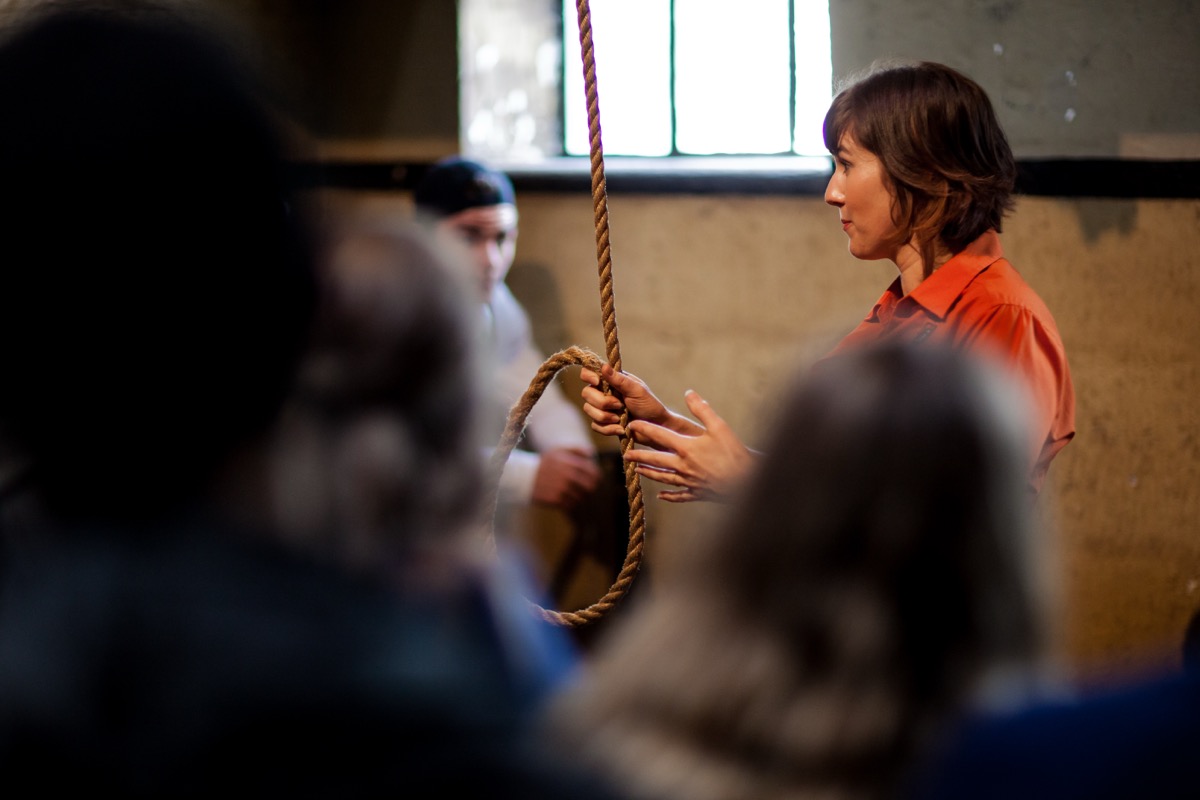
Crime and Punishment
Uncover past punishments in this tour of the Old Melbourne Gaol. Discuss corporal punishments such as the cane and the infamous cat-o-nine-tails; solitary confinement, and capital punishment.
-
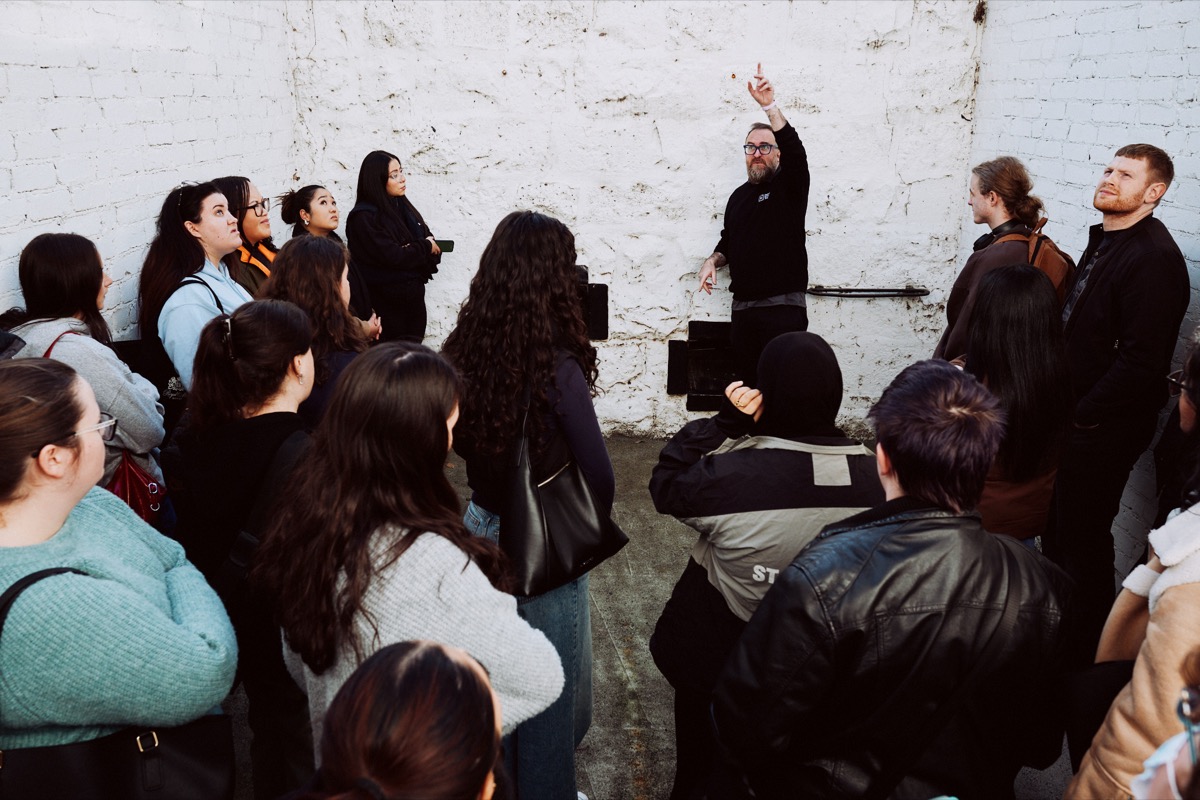
Crime and Punishment
Join your guide for a tour of the notorious H Division to learn about the “prison within a prison” which housed the most dangerous inmates at Pentridge from the 1950s through to the 1980s.