
Respect Me: Consent and Teen Sexting at Old Melbourne Gaol

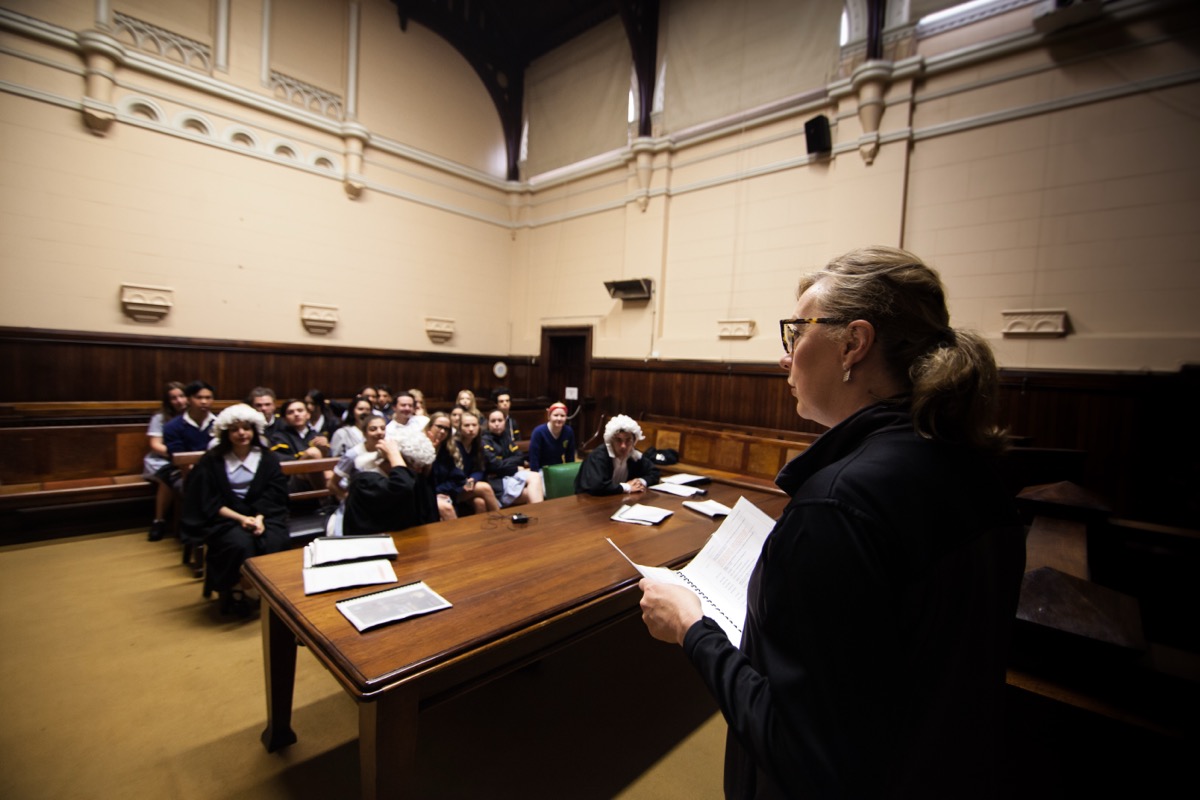

This significant heritage building offers students an engaging and revealing insight into past and contemporary legal process.
The court sits on the same site as the first Supreme Court in Melbourne (c.1842-1884), which saw such famed trials as Ned Kelly’s 1880 murder trial (which resulted in his execution at the Old Melbourne Gaol) and the 1855 trial of the 13 miners from the Eureka Stockade.
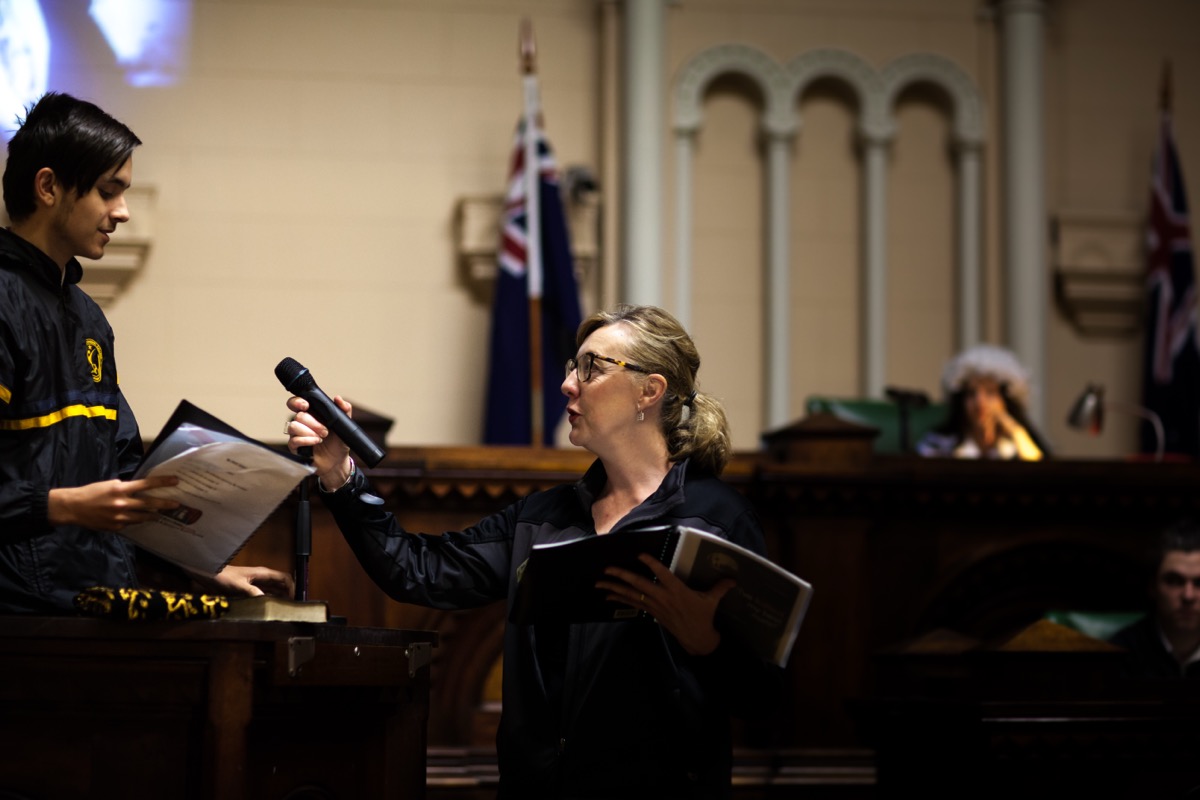
Learn through re-enacting an authentic trial and taking the roles of prosecutor, defence counsel, judge, offender, jury, witnesses and public gallery members. All sessions are run by trained facilitators utilising audio-visual technologies and scripts based on real-life trials.
About the Program
During the Respect Me Court Room Drama, students will take on various roles such as magistrate, defence, prosecution and witnesses, using scripts, costumes and props to reenact the case of Jacob Doyle. Sixteen-year-old Jacob pleaded guilty to several crimes relating to eliciting and transmitting explicit images of his fourteen-year-old girlfriend, Hannah.
This case demonstrates to students the consequences of sexting as teenagers, including the perpetrator, the victim, and their wider circle. During this facilitated program, students are invited to discuss what enthusiastic consent means, and to consider strategies to respond to coercion tactics. Students will explore various sentencing options, considering factors such as age, rehabilitation prospects as well as the consequences of having a criminal record. Students will work towards developing an understanding of present-day courtroom layout, and the roles and responsibilities of various people within the court.
Curriculum Links
| Subject | Strand | Sub-strand | Content descriptions | Students will… |
|---|---|---|---|---|
| Civics and Citizenship | Knowledge and Understanding | Laws and Citizens | the key principles and features of the Australian legal system, including the Australian Constitution, the rule of law and the court system | Discover how the courts operate; who is involved and how justice is achieved through the court process. |
| VC2HC8K05 | ||||
| the types of law in Australia, including criminal law and civil law, and the place of Aboriginal and Torres Strait Islander customary law | Examine an example of a criminal court case. | |||
| VC2HC8K08 | ||||
| Drama | Presenting | rehearse, refine, present and perform improvised, devised and/or scripted drama to different audiences, using performance and expressive skills, and conventions relevant to styles and forms | Perform a scripted drama. | |
| VC2ADR8P01 | ||||
| Health and Physical Education | Personal, Social and Community Health | Interacting with others | examine the roles of respect, empathy, power and coercion in developing respectful relationships | Discuss how disrespect and coercion can affect people in a relationship. |
| VC2HP8P04 | ||||
| explain and apply skills and strategies to communicate assertively and respectfully when seeking, giving or denying consent across multiple settings (including online and offline) | Brainstorm strategies to engage in respectful relationships and how to give consent and understand consent. | |||
| VC2HP8P07 |
| Subject | Strand | Sub-strand | Content descriptions | Students will… |
|---|---|---|---|---|
| Civics and Citizenship | Knowledge and Understanding | Laws and Citizens | the key features and jurisdictions of Australia’s court system; the operations of courts and tribunals, including the roles of courts, judges, lawyers and juries in trials; and the rights of the accused and the rights of victims | Examine how the courts apply and interpret criminal laws. Learn about the various roles in the court including magistrates, prosecution, defence and witnesses. |
| VC2HC10K05 | ||||
| Health and Physical Education | Personal, Social and Community Health | Identities and change | investigate how gender equality and challenging assumptions about gender can prevent violence and abuse in relationships | In the teacher resource pack (provided upon confirmation of booking), examine sources from the past 200 years that depict gender inequality and how it effects all parts of public and private life. |
| VC2HP10P03 | ||||
| Interacting with others | evaluate the influence of respect, empathy, power and coercion on establishing and maintaining respectful relationships | Examine how relationships can remain respectful, and discuss coercion and power imbalances. | ||
| VC2HP10P04 | ||||
| examine how strategies, such as communicating choices, seeking, giving and denying consent, and expressing opinions and needs can support the development of respectful relationships, including sexual relationships | Brainstorm strategies for communicating affirmative consent as well as revoking consent. Discuss how you can respond when you become aware that child abuse material has been distributed. Discuss how to respond when images have been shared without consent. | |||
| VC2HP10P07 | ||||
| Drama | Presenting | plan, rehearse, refine, present and perform improvised, devised and scripted drama in different contexts to a range of audiences in a range of spaces | Perform a scripted drama. | |
| VC2ADR10P01 |
| Subject | Area of Study | Key Knowledge and Skills | Students will… |
|---|---|---|---|
| Legal Studies | Legal Foundations | The role of individuals, laws and the legal system in achieving social cohesion and protecting the rights of individuals | Learn about different roles in a court room including the judge, the defence, the prosecution, the public and the jury. |
| The principles of justice: fairness, equality and access. | Explore what fairness means and how it can be different for different people. | ||
| Define key legal terminology | Use key legal terminology in the context of a mock court trial. | ||
| The presumption of innocence | The purposes of criminal law | Explore why certain laws exist and who they aim to protect | |
| Sanctions | Institutions that enforce criminal law, such as the police and delegated bodies | Learn how the police are involved in cases such as the one being portrayed in the program. | |
| The principles of justice: fairness, equality and access. | Explore what fairness means and how it can be different for different people. | ||
| The purposes of sanctions: punishment, deterrence, denunciation, protection and rehabilitation | Learn what different witnesses, as well as the defence and prosecution, hope to achieve regarding the sanction given, evaluate what kind of sanction would be effective in this case (rehabilitation, protection, or deterrence). | ||
| Types of sanctions such as fines, community correction orders and imprisonment | Explore the different sanctions that the defendant could receive, considering the crime committed, mitigating factors, his age and the evidence presented. | ||
| Factors considered by judges in sentencing | Role play as the judge and consider what different factors could be at play in the sentencing of the defendant. | ||
| Define and use legal terminology | Use key legal terminology in the context of a mock court trial. | ||
| The Victorian Criminal Justice System | The principles of justice: fairness, equality and access. | Explore what fairness means and how it can be different for different people. | |
| The rights of an accused, including the right to be tried without unreasonable delay, the right to a fair hearing, and the right to trial by jury | Understand what rights the accused has, and see those rights upheld. | ||
| The rights of victims, including the right to give evidence as a vulnerable witness, the right to be informed about the proceedings, and the right to be informed of the likely release date of the accused | Witness a victim impact statement and the effect it has on the trial. | ||
| The responsibilities of key personnel in a criminal trial, including the judge, jury, parties and legal practitioners | Understand the different personnel needed in a sentencing hearing such as the judge, witnesses, defence and prosecution. | ||
| The purposes of sanctions: rehabilitation, punishment, deterrence, denunciation and protection | Learn what different witnesses, as well as the defence and prosecution, hope to achieve regarding the sanction given, evaluate what kind of sanction would be effective in this case (rehabilitation, protection, or deterrence). | ||
| Fines, community corrections orders and imprisonment, and their specific purposes | Explore the different sanctions that the defendant could receive, considering the crime committed, mitigating factors, his age and the evidence presented. | ||
| Factors considered in sentencing, including aggravating factors, mitigating factors, guilty pleas and victim impact statements | Role play as the judge and consider what different factors could be at play in the sentencing of the defendant. | ||
| Sociology | Crime and Punishment | The sociological concept of punishment, including the rationale and aims of punishment: retribution, deterrence, rehabilitation and societal protection | Discuss and make a decision as to the appropriate sentence for the defendant, taking into account all of the circumstances presented in the case, and providing a goal for said sentence – punishment, rehabilitation, deterrence, protection etc. |
Program Details
Monday to Friday during school terms
1.25 hours
15-30 students per session
Teacher/carer:student ratio: 1:12
Social script for parents and teachers of students on the autism spectrum.
Teachers will receive a detailed resource pack that includes suggested pre- and post-visit activities upon booking.
$14 per student
Click here to access the Task Risk Assessment.
The court can be accessed by wheelchair users through a side door. The stands where the judge, witnesses and defendant sit are only accessible via stairs.
To book, complete the Online Booking Form. For enquiries, email [email protected] or phone (03) 9656 9889.
Former Magistrate’s Court, Old Melbourne Gaol
377 Russell Street
Melbourne VIC 3000
An excellent and highly informative experience had by our VCE students. The tour guides were very knowledgeable and held the student's focus throughout the mock court experience.
Related Programs
-
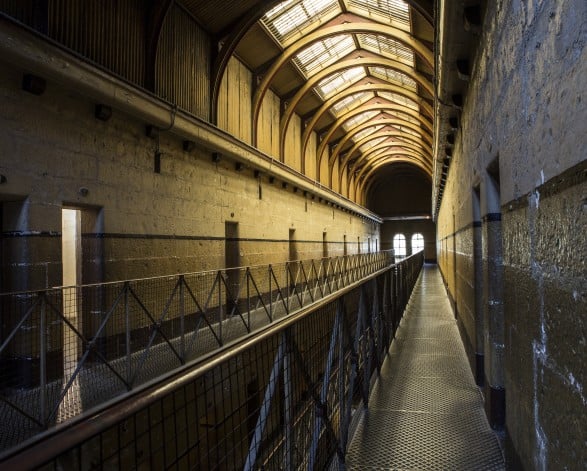
3D Interactive Court Room
Try visiting the interactive Court Room to get an idea of how a court works.
-
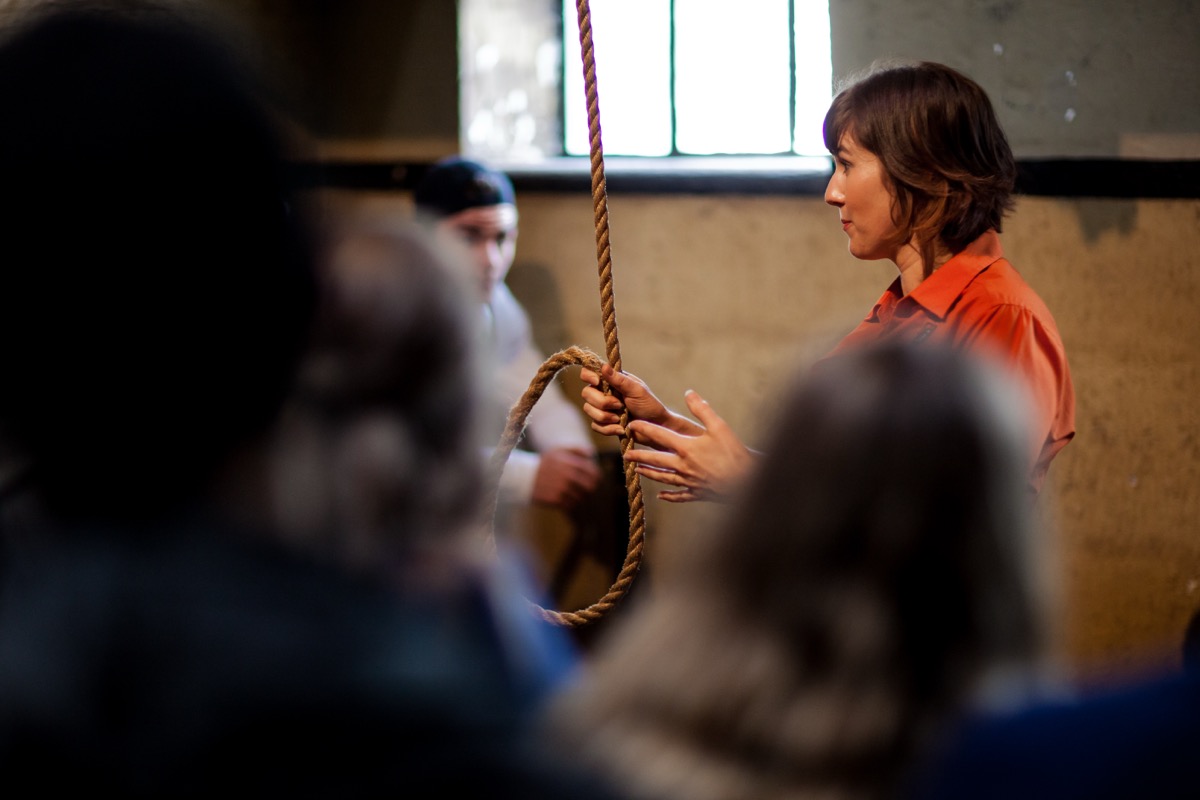
Crime and Punishment
Uncover past punishments in this tour of the Old Melbourne Gaol. Discuss corporal punishments such as the cane and the infamous cat-o-nine-tails; solitary confinement, and capital punishment.
-
Crime and Punishment
Join your guide for a tour of the notorious H Division to learn about the “prison within a prison” which housed the most dangerous inmates at Pentridge from the 1950s through to the 1980s.